 WhatsApp
HVAC works · Mumbai
HVAC Contractor
in Mumbai
IBS is an HVAC contractor in Mumbai. It installs VRF, split and chilled-water systems, ducting, fresh air and kitchen exhaust with its own engineers and workmen, and its design team prepares the HVAC design where you have no consultant. Mumbai’s humid air and its June to October monsoon shape how outdoor units are placed and protected, and new cooling often means applying to your electricity licensee for more load.
What does an HVAC contractor in Mumbai need to plan for?
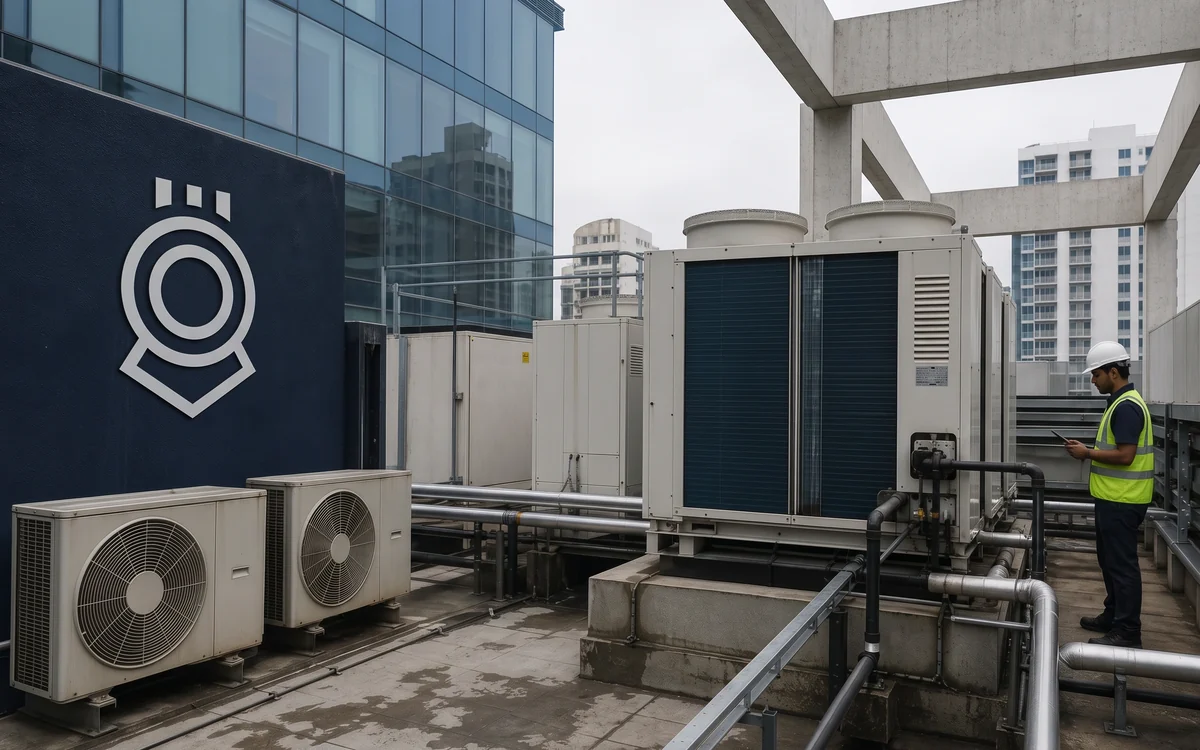
Three things beyond the system itself. Humid air, 83% mean morning humidity at Colaba, so outdoor units, coils and fixings are protected and placed where they can be serviced. The monsoon, so terrace work happens between October and June. And power: new cooling can exceed the connection’s sanctioned load, and the consumer applies to its licensee, BEST, Adani Electricity, Tata Power or MSEDCL, for more.
What is VRF?
Variable refrigerant flow: one outdoor unit serving many indoor units through refrigerant piping, each zone with its own control. It suits mid-size floors with many zones, such as office floors, showrooms and clinics.
What is fresh air treatment?
Conditioning outside air before it enters an occupied space, so a sealed Mumbai office gets fresh air without letting in the humidity with it. It is usually done by a treated fresh-air unit feeding the floor’s ducting.
Scope
Which HVAC systems does IBS install in Mumbai?
Installed by IBS’s own team, to your consultant’s design or to a design prepared by IBS’s design team.
Cooling systems
- VRF and VRV systems for mid-size floors with many zones
- Split and cassette units for cabins, retail counters and server closets
- Chilled-water systems with AHU and FCU distribution for large floors, hotels and hospitals
Air distribution and ventilation
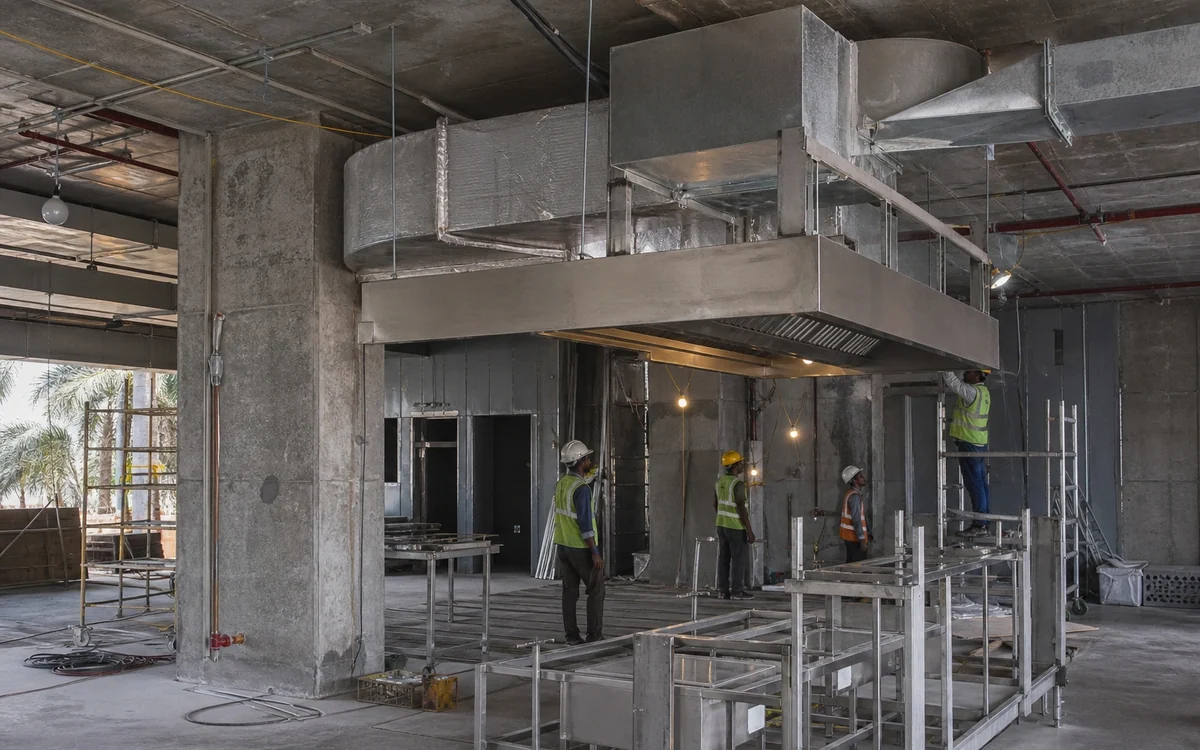
- Galvanised ducting, grilles and diffusers set out against the ceiling plan
- Treated fresh-air units for sealed, occupied floors
- Kitchen, washroom and basement exhaust
Testing and commissioning
- Refrigerant piping pressure tested and leak checked before insulation and ceilings close
- Air balancing at every grille and diffuser
- Commissioning, with the manufacturer’s start-up engineers where the warranty requires them

Mumbai
What does Mumbai’s climate demand from an HVAC system?
Humid air and a four-month monsoon change how equipment is chosen, placed and installed.
Outdoor units and plant
- Units placed where they can be serviced safely and where the landlord agrees the location and weight
- Coated coils, stainless fixings and protected cable runs offered as options for outdoor plant
- Condensate drains sized and laid to fall, so humid air does not end up as ceiling stains
- Terrace penetrations sealed and tested before the monsoon
Inside the floor
- Fresh air conditioned before it enters, so humidity does not come in with it
- Zones matched to how the floor is used, so meeting rooms and cabins do not overcool the open office
- Ducts, sprinklers, trays and lights placed together on one coordinated drawing
Around the programme
- Terrace work, outdoor units and roof penetrations planned for outside the 11 June to 8 October monsoon
- Equipment deliveries booked around service lifts and the building’s loading hours
Problems
What are the common HVAC problems in Mumbai offices?
Frequent causes of air-conditioning complaints in a humid city are decided at design and installation.
Problems that show up after handover
- Sweating ducts and stained ceilings: cold ducts in humid air collect condensation unless they are insulated with a sealed vapour barrier
- Overcooled meeting rooms: one zone serving rooms with very different loads; the fix is zoning to how the floor is used
- Outdoor units running hot: units packed onto a ledge recirculate their own exhaust air; spacing follows the manufacturer’s clearances
- Blocked or backing-up drains: condensate lines without fall or access; drains are laid to fall with cleanable traps
- Noisy ceilings: fan coil or cassette units placed over quiet rooms; units are sited away from cabins and meeting rooms
What is checked before handover
- Duct insulation and vapour barrier inspected before the ceiling closes
- Room temperatures checked zone by zone after air balancing
- Drain falls tested with water before the ceiling closes
Rules
Which Mumbai rules affect HVAC work?
Stated as principles, because the detail changes. Every permission is the client’s to obtain; IBS can prepare the drawings and handle liaison, charged separately.
Power supply
- Mumbai has more than one electricity distribution licensee: BEST in the island city, Adani Electricity in the suburbs, Tata Power across both, and MSEDCL in parts of the eastern suburbs such as Bhandup and Mulund
- New HVAC, kitchens or server rooms can take a floor past its sanctioned load; the consumer applies for additional load to its own licensee, which must accept the application on paper or online
- IBS’s design team calculates the connected load for your fit-out, so your application can be made before the equipment arrives
Outdoor units and the building
- Outdoor unit locations, weights and pipe routes need the landlord’s or society’s agreement before installation
- Terrace or ledge work may need the building’s permit for work at height
- Facade openings for ducts or pipes need the building owner’s structural consultant
IBS
Why choose a Mumbai-based HVAC contractor?
HVAC competes with every other service for ceiling space. One in-house team reduces the clashes.
What IBS’s Mumbai base changes for you
- Head office in Goregaon West; furniture and joinery made at IBS’s factory near Vasai East, north of the city
- Site teams, procurement and the project lead are run from Mumbai, not flown in for the job
- An in-house design team for every discipline, and IBS’s own engineers and workmen for civil, MEP, fire fighting, HVAC, interiors, painting and furniture
- On an architect-led project IBS builds the architect’s design; where there is no architect, its design team prepares the drawings
- Approved vendor at Adani Airports, HDFC ERGO, Reliance Retail, Godrej Finance, EPSON, Duravit, HSBC, Tata CLiQ, Canon, Aditya Birla Fashion and Retail and HDFC Life
Sequence
How does an HVAC job run in a Mumbai office?
From the first visit to handover, the sequence below is built around the building’s rules and the monsoon.
Survey and design
- A site survey of the existing plant, the sanctioned load, the ceiling void depth and the possible outdoor unit locations
- Heat load worked out from occupancy, equipment, glazing and sun, and the fresh air the floor needs, by IBS’s design team or your consultant
- Outdoor unit positions, weights and pipe routes agreed with the landlord or society
Installation and handover
- Ducting, refrigerant piping and condensate drains installed before the ceiling grid, in the order agreed with the other trades
- Pressure and leak tests, then insulation closed and checked for gaps in the vapour barrier
- Commissioning and air balancing, then a walk-through of the controls with your facility team
Checks
What should a Mumbai HVAC quotation include?
In a humid city, the difference between two HVAC quotations is often in the lines that stop condensation and protect outdoor plant.
In the specification
- Duct insulation with a sealed vapour barrier, stated, not assumed
- Condensate routes and falls shown on the drawing
- Coil coating and stainless fixings priced as options, so you can decide
- Outdoor unit locations shown, with the manufacturer’s clearances
In the price and handover
- A connected-load calculation, and who applies to the licensee for more load
- Commissioning and air balancing included, with the manufacturer’s start-up where the warranty needs it
- Twelve months on installation, with manufacturer warranty on units passed through
Need an HVAC contractor in Mumbai?
Send the address, the area and any drawings. You get a site survey and a line-item BOQ, with equipment options priced side by side.
Request an HVAC quoteVRF or chilled water: which suits a Mumbai building?
The choice is made at design stage, by your consultant or IBS’s design team, and follows the floor plate, hours of use and plant space. This is how the two compare in general terms.
| VRF / VRV | Chilled water | |
|---|---|---|
| Often chosen for | Mid-size office floors, showrooms, clinics | Large floor plates, hotels, hospitals, malls |
| Plant space | Outdoor units on a terrace, ledge or plant deck | A chiller plant room, pumps and often a cooling tower |
| Zoning | Many zones, each with its own controller | Zoned at the AHU or FCU |
| Installation risk to watch | Brazing and pressure testing of long refrigerant runs | Pipe testing, insulation and balancing across many units |
Market Context
What the published data says
- Mean relative humidity at Mumbai (Colaba) is 83% at 0830 IST across the year, and 90% in July, August and September (1991 to 2020 normals). IMD, Climatological Tables of Observatories in India 1991-2020, Ninth Edition
- A distribution licensee must let an applicant apply for supply or additional load on paper, online or by app, and must publish its procedure for enhancement of load. MERC, Supply Code and Standards of Performance Regulations, 2021, regulation 5.1
- Mumbai’s normal monsoon onset is 11 June and normal withdrawal is 8 October. IMD, New Normal Dates of Onset and Withdrawal of the Southwest Monsoon, May 2020
Questions Buyers Ask