 WhatsApp
Sector 14
Dealer Boards & In-Shop Branding
for Paint, Cement & Durables Brands
Dealer boards, lit and non-lit shop boards and in-shop branding for paint, cement, tiles, sanitaryware, electricals and consumer durables brands, measured shop by shop and installed with proof. India’s paints and coatings market reached US$ 10.3 billion in 2026 (IMARC, 2026) and cement production reached 491.4 million tonnes in FY26 (IBEF, 2026). Much of it is sold across a dealer’s counter, under a board the brand paid for.
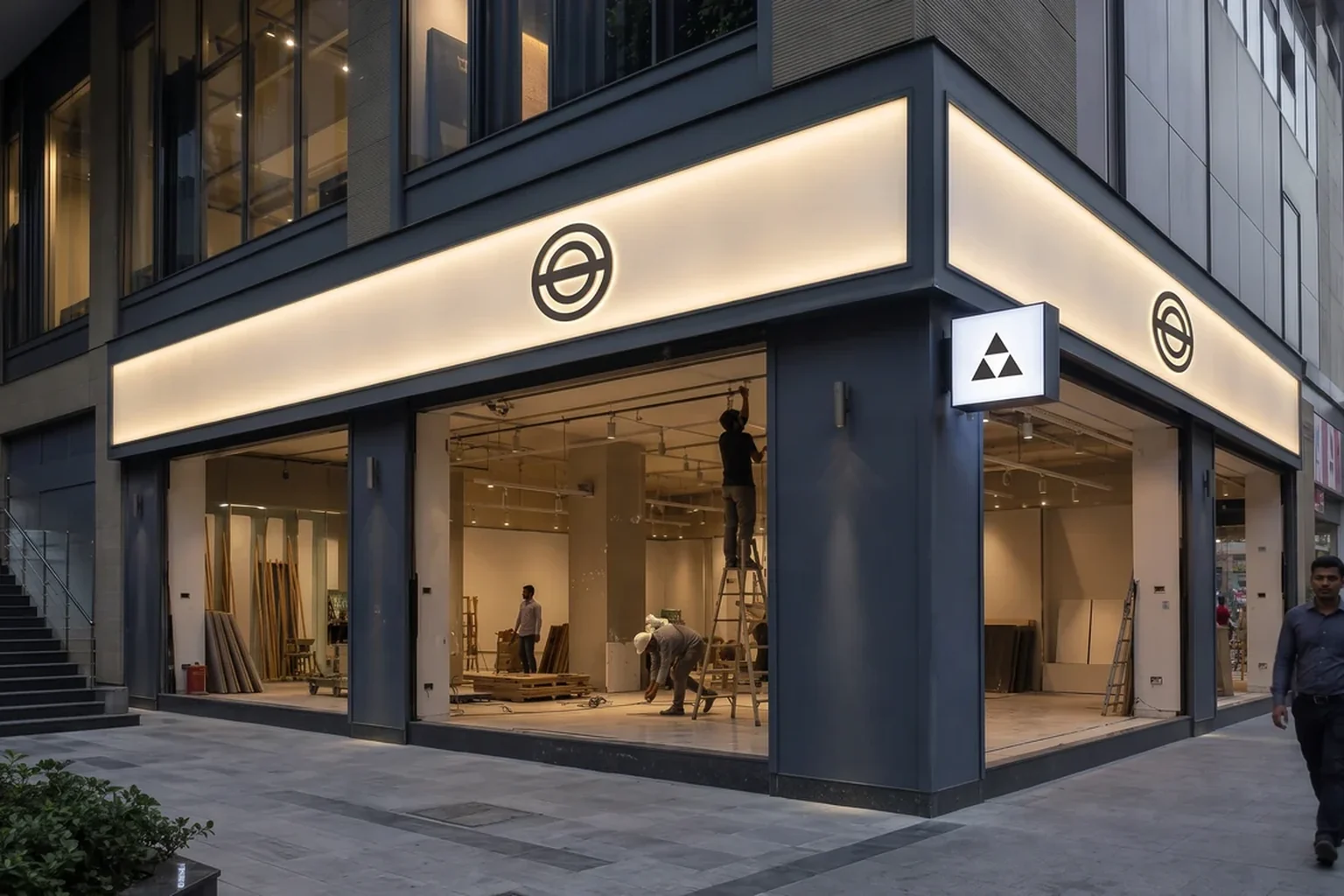
Brand Dealer Networks, Dealer boards, lit and non-lit shop boards, in-shop branding, shade card and display units, and counter graphics for paint, cement, tiles, sanitaryware, electricals and consumer durables brands branding thousands of independent dealer shops. Impulse Branding Solutions executes all work in-house, from fabrication at our Mumbai facility to site installation, with a single in-house civil and engineering team.
Services We Deliver
Brand Dealer Networks Branding & Fit-Out Services
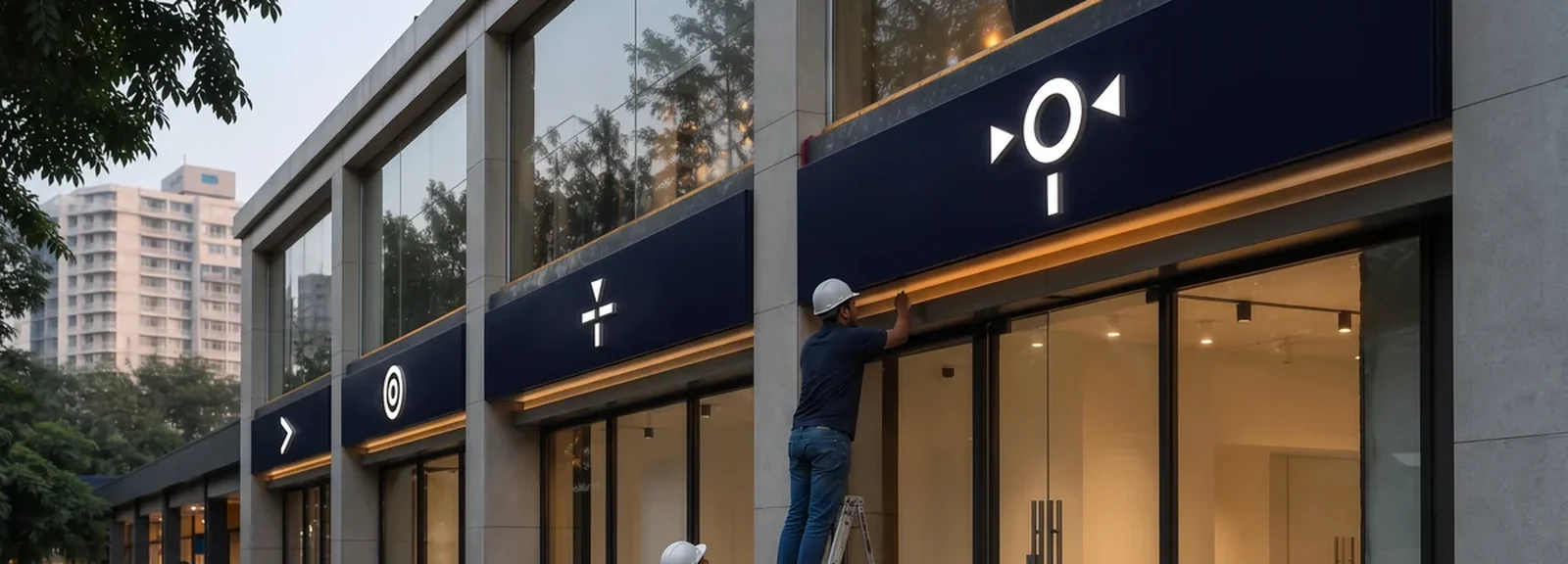
Sector Challenges We Solve
What Makes Brand Dealer Networks Projects Different
Every Shop Front Is a Different Size
Dealer shops range from a two-metre kirana-style front to a twelve-metre building materials showroom. A single board size fits almost none of them. IBS measures each shop, sizes the board to its fascia from a modular artwork system, and keeps the brand zone and the dealer’s name in fixed proportions.
The Board Sits on Someone Else’s Shop
The brand pays for the board, but the dealer owns the shop, the landlord owns the wall and the municipality decides whether a lit board needs a licence. IBS records dealer consent, checks local permission rules for lit boards, and installs so the board can be serviced or removed without damaging the frontage.
Proving the Board Went Up
On a programme of thousands of shops, the brand pays per installed board and needs proof. IBS returns dated before-and-after photographs of every installation, matched to the dealer code, so payment and audit run from the same record.
Why Impulse Branding Solutions
Our Advantage in Brand Dealer Networks
Measured, Not Guessed
A shop survey per dealer, feeding a modular artwork system so each board fits its fascia and keeps brand proportions.
Proof of Installation per Dealer Code
Dated before-and-after photographs for every shop, matched to the dealer code for payment and audit.
Central Production, Local Installation
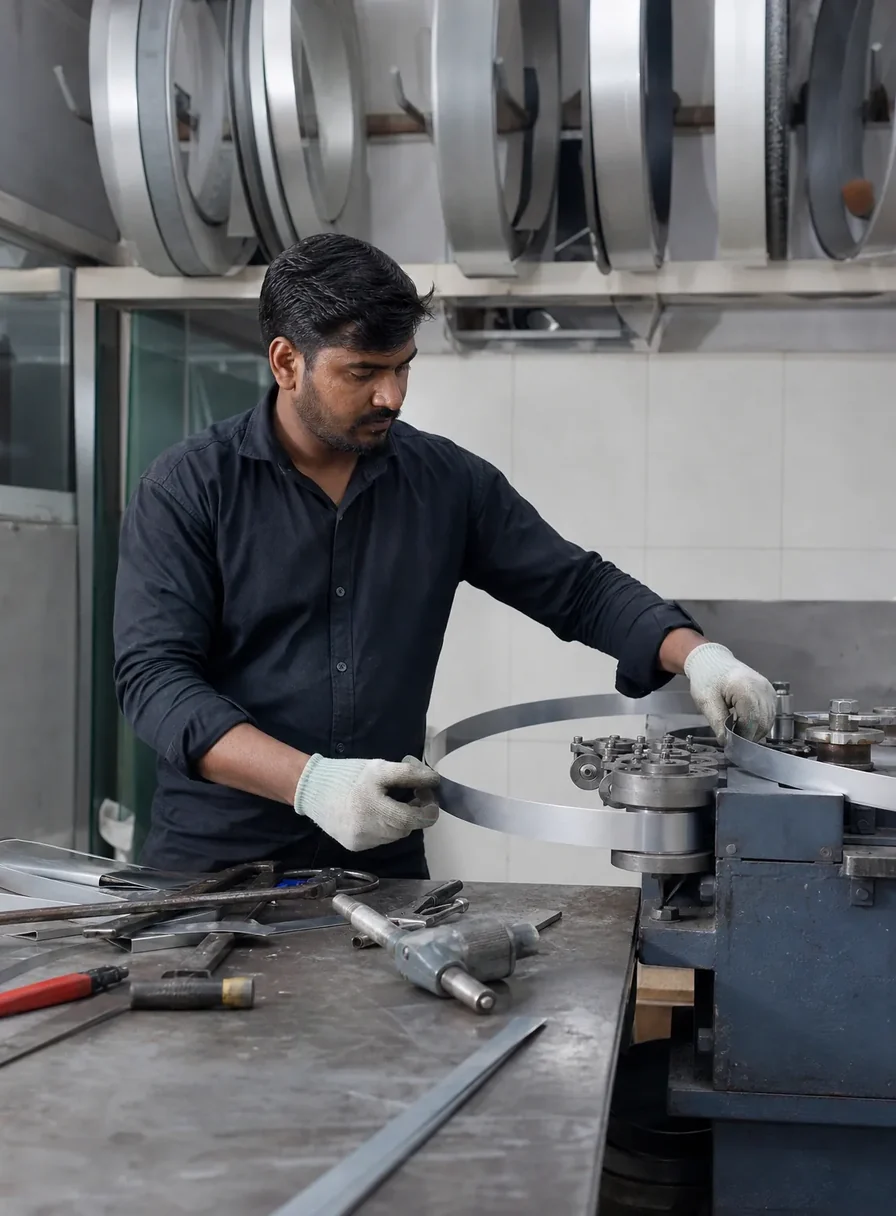
Boards produced in batches at the IBS Mumbai facility to one colour standard, dispatched by route and installed by IBS crews.
Frequently Asked Questions
Common Questions About Brand Dealer Networks Projects
What is a dealer board?
A dealer board is the shop sign a brand puts up on an independent dealer’s shop, carrying the brand’s identity and the dealer’s name. Paint, cement, tiles, sanitaryware, electricals and durables brands fund them across thousands of shops, because the board is the brand’s most visible presence at the point where most of its product is sold.
What is a non-lit board, and how is it different from a glow sign board?
A non-lit board has no internal lighting: printed vinyl or flex on an aluminium composite panel or frame. A glow sign board is a box with a translucent face lit from inside by LEDs. Non-lit boards cost less and, in Mumbai, need no BMC permission when they relate to the trade on the premises; lit boards read at night but need permission.
Does a brand’s dealer board need municipal permission?
In Mumbai, BMC’s 2025 guidelines exempt non-illuminated boards relating to the trade on the premises (clause 1.9) and require written permission for any illuminated board (clause 2.1(a)). The policy does not say whether a brand-sponsored board counts as relating to the trade on the premises or as a commercial advertisement, which clause 2.11(B) limits to 10 ft x 10 ft. Confirm with the ward office for lit programmes.
Does the Marathi name-board rule apply to dealer boards in Maharashtra?
Section 36A of the Maharashtra Shops and Establishments Act, inserted in 2022, requires an establishment’s name board in Marathi, in Devanagari script, written first and in a font no smaller than any other script. Where the brand-funded board serves as the dealer’s name board, it should carry the Marathi name first. The rule also covers shops with fewer than ten workers.
How do you size boards for thousands of different shops?
Each shop is measured, and the board is sized to its fascia from a modular artwork system: the brand zone, the dealer’s name and any product line keep fixed proportions while the overall width and height change. That avoids both oversized boards that overhang and undersized ones that waste the frontage.
How does IBS prove a dealer board was installed?
Every installation returns dated before-and-after photographs matched to the dealer code, with the board size and type recorded. The brand’s channel team can reconcile installed boards against its dealer list and approve payment from the same record, without sending someone to each shop.
What is in-shop branding for a paint or building materials dealer?
Shade card and colour display units, tile and sanitaryware display stands, counter fronts, wall graphics and product posters, shelf strips, and window graphics. It sits behind the dealer board and decides what the customer sees at the counter, which is where the brand choice is often made.
How big is the Indian paints market?
IMARC Group estimates India’s paints and coatings market at US$ 10.3 billion in 2026, up from US$ 9.4 billion in 2025, and forecasts US$ 17.7 billion by 2034 at a 7.06% annual growth rate. Other research firms publish different figures, so this one is quoted by name.
How much cement does India produce?
IBEF reports cement production of 491.4 million tonnes in FY26, up 8.6% from 453 million tonnes in FY25, and says India holds more than 8% of global installed capacity. Cement reaches builders largely through dealer networks, which is why cement brands invest in dealer boards.
How big is the ceramic tiles market in India?
IMARC Group puts India’s ceramic tiles market at 1,256 million square metres in 2025, projected to reach 1,676.9 million square metres by 2034. Tile brands brand their dealers’ showrooms and display stands because tiles are chosen visually, in the shop.
Which lasts longer: a flex, ACP or glow sign dealer board?
Flex on a frame is the cheapest and fastest but fades and tears soonest outdoors. Printed vinyl on aluminium composite panel lasts longer and stays flat. A glow sign reads at night but costs more, uses power and needs permission in cities like Mumbai. Most programmes mix them by town and shop size.
What happens to the board if a dealer switches brands?
The brand and dealer agreement decides who owns the board. IBS records dealer consent at installation and installs so a board can be removed without damaging the frontage. For de-branding, IBS removes the board, makes good the fascia and recovers reusable frames where the brand wants them back.
What does a dealer board cost in India?
Published IndiaMART listings seen on 26 September 2026 put the middle half of prices at about ₹35 to ₹238 per sq ft for flex boards, ₹185 to ₹250 per sq ft for ACP work and ₹213 to ₹700 per sq ft for glow sign boxes. These are market reference ranges, not IBS quotations, and most listings do not say what they include.
Has IBS run dealer board programmes?
IBS’s named client work on this site is in airports, banking, insurance, retail and corporate offices, including branch signage and in-branch branding for IDFC FIRST Bank across India. It does not name a dealer board programme client here. What it brings is the same rollout method: survey, approved kit, central production, IBS installation crews and as-installed photographs for every site.
What warranty does IBS give on dealer boards?
Signage workmanship is warranted for 12 to 24 months depending on the product, with manufacturer warranty passed through on named LED modules and power supplies for lit boards. A named IBS contact covers the programme, and replacement boards are produced from the same artwork master so they match the originals.
What does a dealer board programme involve?
Putting one brand standard on thousands of independent shops, each a different size, owned by a dealer and governed by local rules. That means a survey per shop, boards sized from a modular artwork system, consent from the dealer, permission checks for lit boards, central production and proof of installation per dealer code. IBS runs each step.
What is a dealer board?
The shop sign a brand installs on an independent dealer’s shop, carrying the brand identity and the dealer’s name. Paint, cement, tiles, sanitaryware, electricals and durables brands fund them because the dealer’s counter is where most of their product is sold.
What is a non-lit board?
A shop board with no internal lighting, usually printed vinyl or flex on aluminium composite panel. In Mumbai, BMC’s 2025 guidelines exempt non-illuminated boards relating to the trade on the premises from permission; illuminated boards need written permission.
Scope
What goes into a dealer branding programme
The board is the visible part. The survey, consent and proof are what make it work at scale.
Outside the shop
- Dealer board: non-lit ACP, flex on frame or glow sign box
- Board sized to the fascia from a modular artwork system
- Marathi-first name line for Maharashtra dealers
- Projecting or side boards where the frontage allows
Inside the shop
- Shade card and colour display units
- Tile and sanitaryware display stands
- Counter fronts, wall graphics and product posters
- Shelf strips and window graphics
Permissions and consent
- Dealer consent recorded before installation
- Lit boards checked against municipal permission rules
- In Mumbai, boards kept within the building line
- Installation that allows removal without damaging the frontage
Proof and payment
- Dated before-and-after photographs per dealer code
- Board size and type recorded per shop
- Reconciliation against the brand’s dealer list
- Payment approved from the same record
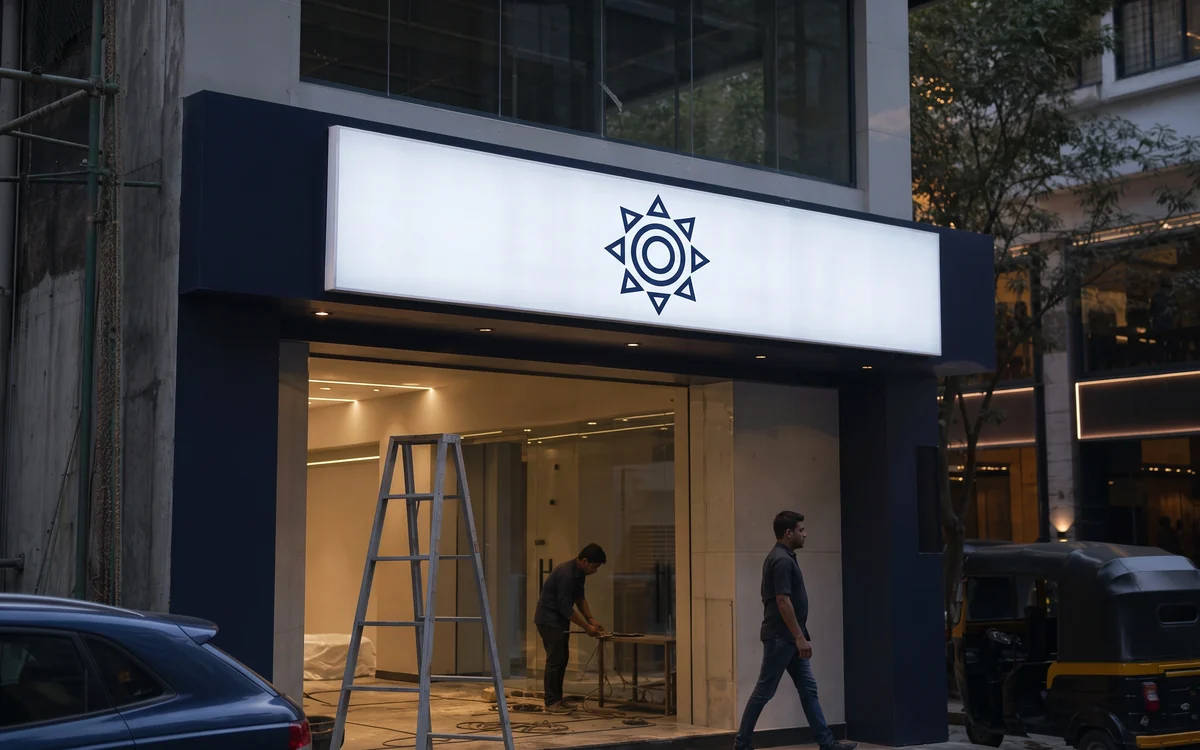
Rollout
How IBS runs a multi-thousand shop programme
Routes, not shops: surveys, production and installation are planned town by town.
How a network rollout runs
- Site survey per outlet: frontage, structure, power, landlord and municipal rules
- Artwork adapted from the brand standard and approved per site type
- Batch production at the Mumbai facility against one physical colour swatch
- Dispatch by route with installation drawings; IBS crews install
- As-installed photographs per site, day and night where the sign is lit
- One BOQ line per site type, so each outlet’s cost is traceable
How outdoor network signage is specified
- Faces and fascias on aluminium composite panel over a powder-coated frame
- Lit elements with LED modules and named SMPS drivers, rated IP65 outdoors
- Lightbox faces on diffuser-grade acrylic or flex face for even light
- Supply through MCB and RCCB protection, earthing to IS 3043, cabling in conduit
- Structural check on pylons and large boards; shop drawings per site type
- A signage schedule per outlet that the installation photographs are checked against
What IBS brings regardless of sector
- Signage fabricated at the IBS Mumbai facility: laser cutting, powder coating, assembly, QC
- Furniture built at the Vasai East factory to as-built dimensions
- In-house civil engineers, MEP coordinators, false ceiling and joinery teams
- Built to NBC 2016, IS 3043 (earthing) and IS 732 (electrical installation)
- Factory QC on every unit before dispatch, so defects surface in Mumbai not on site
- Pan-India delivery plus UAE, Saudi Arabia, Oman, Qatar and Kuwait
What you receive at handover
- Joint snag walk, snags listed, dated, closed and photographically evidenced
- As-built drawings plus commissioning and test records for HVAC, electrical and fire
- Warranty certificates with manufacturer pass-throughs collated in one file
- Signage workmanship warranted 12 to 24 months; fit-outs carry a stated defect liability period
- A named IBS contact for that period, holding the original drawings and spares
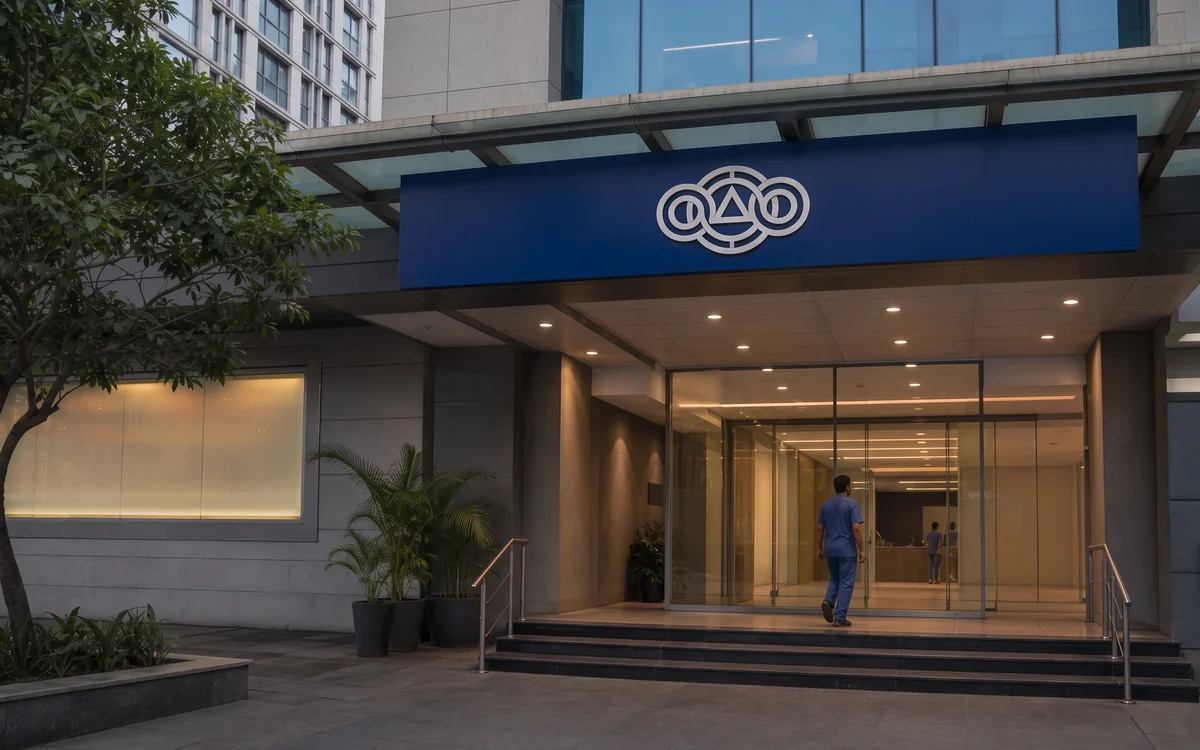
Commercials
How the work is priced, specified and verified
The parts of a quotation that decide whether the number you compare is the number you pay, and the named components behind the specification.
How a price is built
- A line-item BOQ against a stated scope, not a rate per square foot
- Component brands named on the BOQ rather than written as a generic line
- Provisional sums identified as provisional, not folded into a rate
- Written assumptions, so you can see which one moved if the number changes
- Variations agreed in writing against the original BOQ before work proceeds
- RA bills raised against measured work completed, not elapsed calendar time
Named components we specify
- LED and drivers: Nichia-class modules with Mean Well or Schneider drivers, IP65 outdoors
- Films and wraps: 3M and Avery Dennison cast media
- Electrical: Havells, Legrand and Schneider switchgear, MCB and RCCB protection
- HVAC: Daikin, Blue Star and Voltas VRF and ducted systems
- Plumbing: Astral and Supreme CPVC and UPVC, Jaquar fixtures
- Boards and laminates: Gyproc and Saint-Gobain partitions, Merino and Greenlam surfaces
What to check in any quotation, ours included
- Is the driver brand named, or does the line just say "LED driver"? That is the component that fails first and the one most often substituted downward.
- Is the defect liability period stated in months, and does it start at handover or at practical completion?
- Does the price assume access you actually have, and what happens to it if the access window changes?
- Who is the named project lead, and how many other jobs are they running at the same time?
- Are spares held against your specification, or bought nearest-match when something fails?
- On a multi-site programme, how will you be shown that site 140 matches site 1 without visiting both?
How quality is verified
- Colour proofed against one approved physical swatch under controlled lighting
- Factory QC on every unit before dispatch from the Mumbai facility
- Hydrotesting on plumbing and pressure tests on sprinkler lines before concealment
- Earthing verified to IS 3043; electrical installation to IS 732
- Snag list walked jointly, closed and re-inspected with photographic evidence
- As-built photographs of every installed location on a multi-site programme
Branding a dealer network?
Send the dealer list by town, the board options and the budget per board. You get a survey plan, a modular artwork system and a proof-of-installation process tied to your dealer codes.
Scope a dealer programmeDealer board types compared, with market reference prices
Price ranges are the middle half of IndiaMART seller listings seen on 26 September 2026, not IBS quotations; most listings do not state what they include. Permission notes refer to BMC’s 2025 guidelines in Mumbai.
| Market reference price | Life outdoors | Mumbai permission | |
|---|---|---|---|
| Flex on frame | ₹35 to ₹238 per sq ft | Shortest; fades and tears soonest | None if non-lit and relating to the trade on the premises |
| Vinyl on ACP (non-lit) | ₹185 to ₹250 per sq ft for ACP work | Longer; stays flat and cleanable | None if non-lit and relating to the trade on the premises |
| Glow sign box | ₹213 to ₹700 per sq ft | Long, with LED and driver service | Written permission required |
| 3D LED letters | ₹63 to ₹150 per inch of height | Long, with LED and driver service | Written permission required |
Market Context
What the published data says
- India’s paints and coatings market reached US$ 10.3 billion in 2026, forecast at US$ 17.7 billion by 2034. IMARC Group, India Paints and Coatings Market, updated 7 September 2026
- Cement production reached 491.4 million tonnes in FY26, up 8.6%. IBEF, Cement Industry in India, updated September 2026
- Non-illuminated boards relating to the trade on the premises need no permission; illuminated boards need written permission. BMC, Policy Guidelines for Display of Outdoor Advertisements 2025, clauses 1.9 and 2.1
- Glow sign board listings: middle half ₹213 to ₹700 per sq ft, across 20 listings on 26 September 2026. IndiaMART, Glow Sign Board category