 WhatsApp

Digital or Offset Printing: Record the Decision Before Comparing Prices
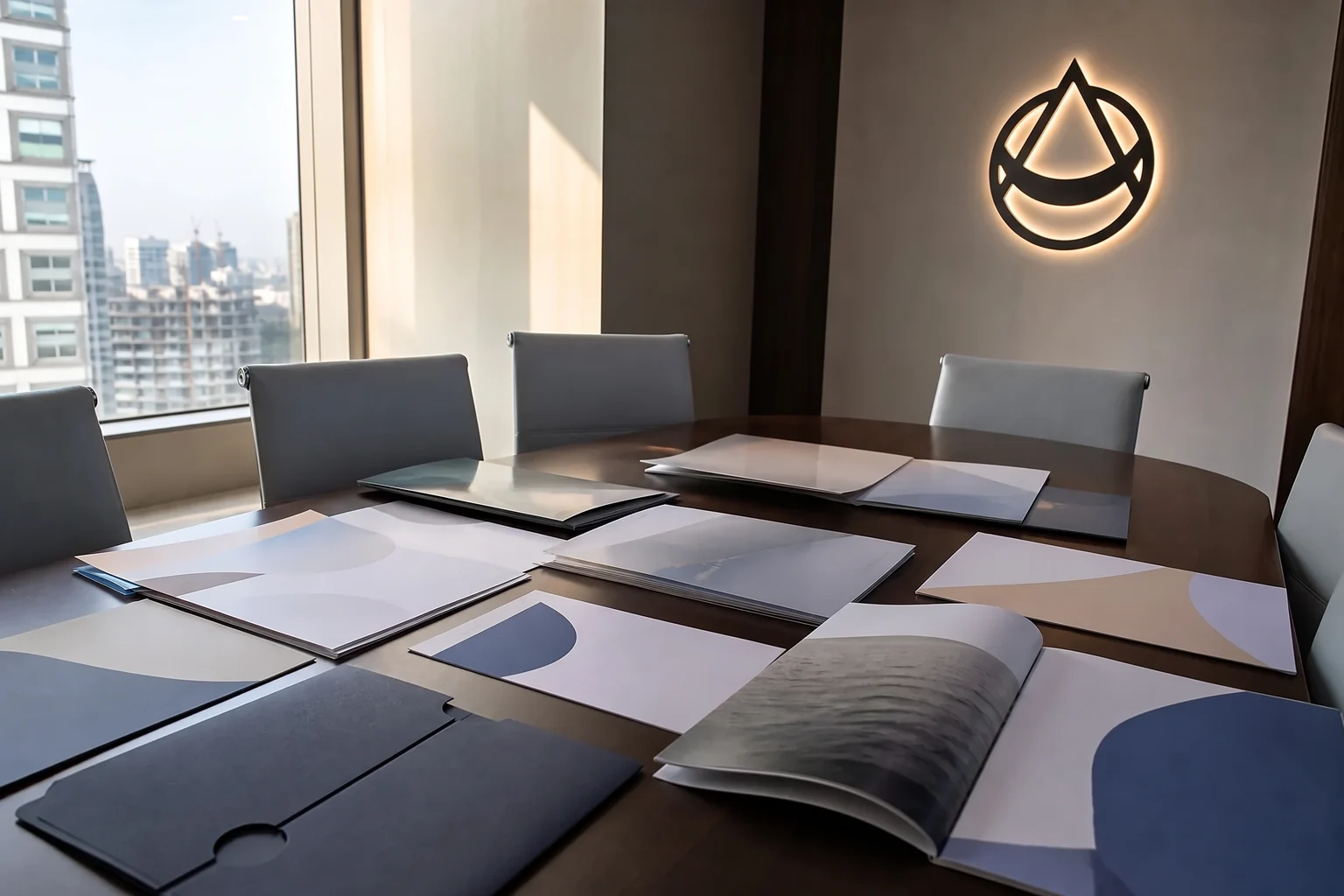
AI-generated representative print-review visual. It does not show an actual IBS process trial or a signed client decision.
Choose digital or offset after defining the printed item and testing the proposed route against that specification. A remembered quantity threshold cannot decide a brochure with several editions, a particular stock and an unconfirmed finish. Record the feasible alternatives, their quoted scope and the reason for the choice. The blank worksheet below helps procurement and brand teams ask the printer the same questions before comparing totals.
Give each process proposal the same starting brief
Download the CSV and create a row for each item, edition group and proposed process. Copy the same finished size, pagination, stock, quantities and required dates into the alternatives being compared. Where a bidder changes a material or finish, identify that difference rather than treating the price as another quote for the same product.
The record is a proposed buyer worksheet with blank rows. It is not a cost calculator, signed approval or IBS operating procedure. Keep quotations and samples separately and enter their references. A blank feasibility or proof field means the decision is still open.
Ask what changes when the process changes
HP’s industrial-printing guidance distinguishes plate-free digital workflows from conventional offset setup and discusses on-demand and variable-content work. That explains useful questions to ask; it does not establish the equipment or economics of a particular IBS quotation. Ask the supplier to describe the actual route proposed for your item.
Split the total quantity by edition. Identical artwork throughout a run is a different brief from several language or branch versions, or content changing between copies. Ask how setup and file handling are priced for those versions. If variable content is required, obtain an explicit feasibility response and define who checks the data.
Stock is another decision gate. Give both alternatives the same paper reference, cover/text split and finish requirement. If one route needs a substitution, request the sample and reason. A cheaper alternative on a different stock is a design choice for approval, not an unnoticed saving.
Use decision gates before a price ranking
The table is proposed buying guidance. Neither column automatically selects a machine. A printer must confirm the production combination and the buyer must accept any change in the specified result.
| Brief condition | Question for the printer | Decision to record |
|---|---|---|
| Several editions or changing content | How will each version be produced and checked? | Feasible process and setup basis by edition |
| One stable issue with a larger planned run | What is the complete quote for each feasible route? | Comparable scope and total, without a universal crossover |
| Specified stock or unusual finished format | Can the proposed route handle the actual combination? | Accepted stock/format or a separately approved alternative |
| Colour or appearance matters to acceptance | What proof represents this process and stock? | Proof coverage, limits and reviewer |
| Binding or premium finishing required | Which operations and route are included? | Confirmed finish, sample and exclusions |
| Staged need or likely content revisions | How are the initial order and later requirement priced? | Quantity committed now and assumptions for later orders |
Hold the decision where feasibility, proof or finishing remains unresolved. A low price does not close those fields.
Compare the purchased result, including finishing
Request the same cost boundaries for each alternative: setup, printing, required proof or sample, finishing, packing and delivery. Ask what an extra edition or correction would change. Compare the complete quoted scope, with tax treatment and exclusions identified, rather than contrasting one supplier’s print-only rate with another’s finished-delivered price.
Confirm finishing before selecting the print route. Binding, folding, lamination or another specified operation needs its own feasibility and approval. State the actual production and finishing route in the quotation. Core in-house print capability does not establish that every premium finish is available in-house.
Make the proof answer the process question
A PDF can identify content, page order and layout while leaving the physical print appearance unresolved. Ask whether a sample uses the proposed stock, process and finish, or stands in for only part of them. Record that coverage before accepting it as evidence for a larger order.
Adobe’s print-PDF guidance calls for resource and preflight checks and the print provider’s specified colour profile. Ask for those requirements before exporting files. File readiness and acceptance of the physical print are separate decisions; neither a chosen preset nor a clean file report guarantees the final colour.
Retain the reason for the choice
Record the chosen route, quotation and sample references, the approver and any open condition. Add a review trigger if the stock, page count, edition mix or quantity changes. A process chosen for the first order should not silently become the answer to a different reorder.
Use the existing corporate-print RFQ and proof record for production release, version control and destination-wise despatch. This worksheet ends at the process decision. Send IBS the finished size, pages, stock, quantity by edition, required dates and destinations so a proposal can address the real product.
Sources
- Manufacturer explanation of plate-free digital setup, conventional offset and variable-content workflows; used for process questions, not universal cost thresholds or IBS equipment claims. Read 25 November 2026. HP Industrial, Digital Printing in an Offset Printing Environment
- Checks before PDF export and use of the print provider’s specified colour profile. Updated 2 June 2026; read 25 November 2026. Adobe, Produce print-ready PDF files
Frequently asked questions
At what quantity should we switch from digital to offset?
Does a larger total quantity automatically favour offset?
Can a digital sample approve a later offset order?
Should we choose the process before selecting paper?
Does this worksheet confirm IBS owns every finishing process?
What should we send IBS for a process recommendation?

Comparing processes for a print order?
Share finished size, pages, stock, quantity by edition, artwork status, target date and destinations. Include finishing and sample requirements so IBS can review a comparable production scope.