 WhatsApp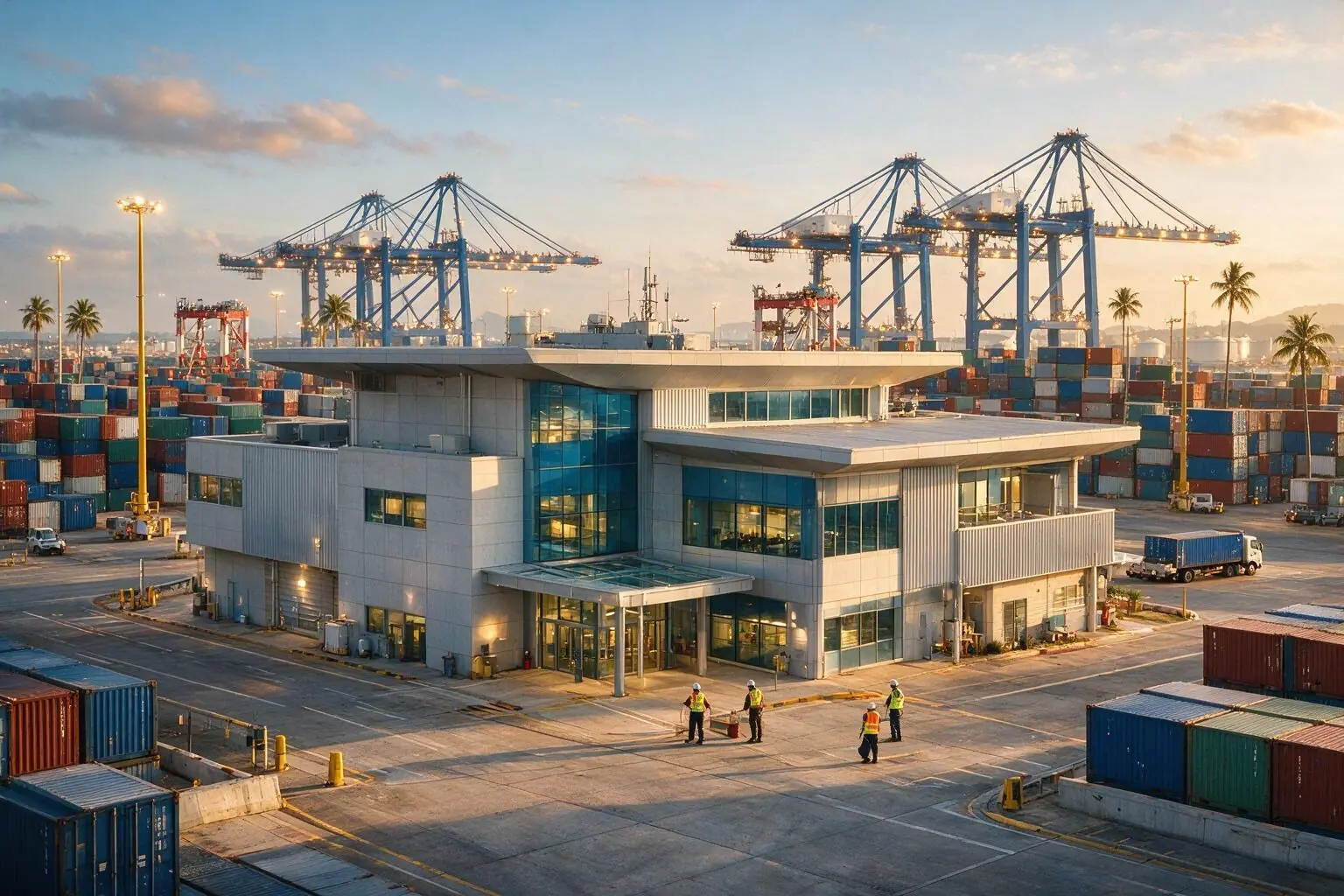
Warehouses and Logistics Parks
Pallet trucks, forklifts and long aisles need a hard-wearing floor and clear markings. Floors in running warehouses are laid zone by zone, around the racking and the working day.
General Contracting
Epoxy coatings, self-levelling and heavy-duty epoxy, PU floor coatings and line marking for factories, warehouses, car parks, kitchens and hospitals, laid by IBS’s own teams over a slab that has been prepared and moisture tested first.
Last updated: 29 September 2026
In Short
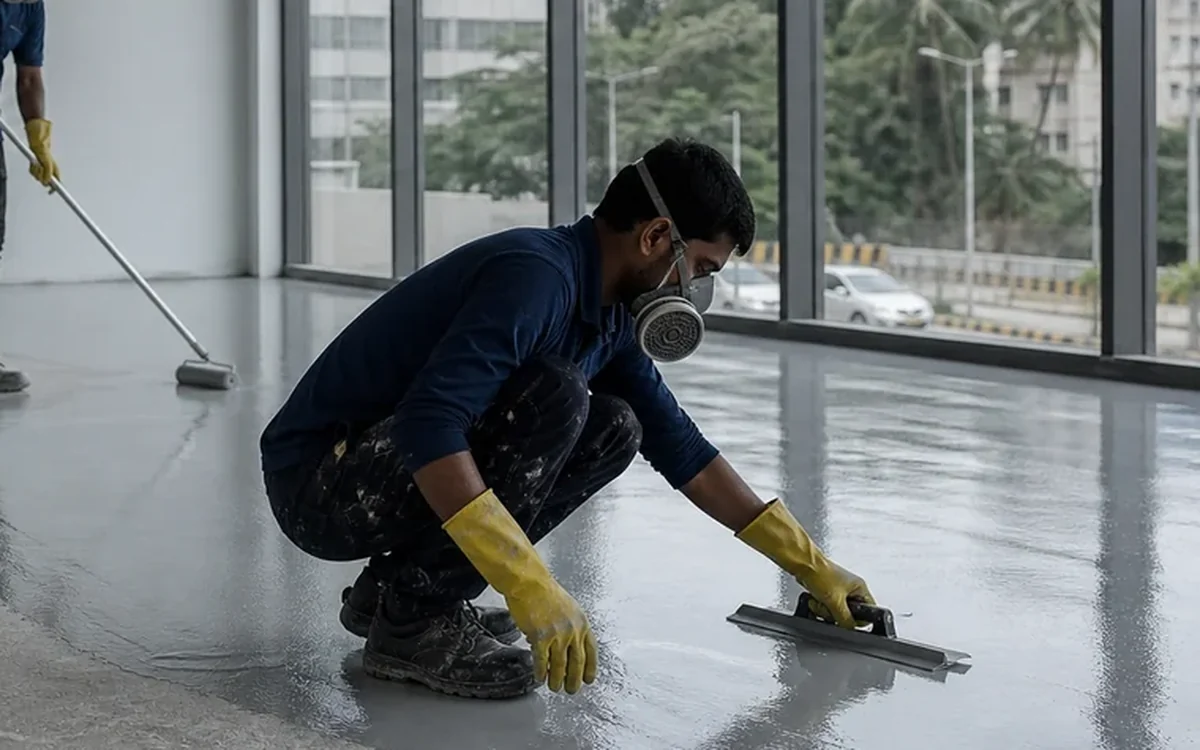
An epoxy floor is a two-part resin system bonded to a concrete slab to give a hard, sealed, easy-to-clean surface. Whether it lasts depends mostly on the slab underneath. IBS mechanically prepares and moisture tests the concrete, repairs it, then lays the coating or screed and the line marking with its own teams, across India.
Poor slab preparation is the most common cause of epoxy floor failure. The coating is rolled onto a slab that is dusty, damp or still carrying the laitance from when it was poured, and within months it lifts in sheets or wears through in the aisles. A more expensive topcoat does not prevent that. Impulse Branding Solutions treats the slab as the first part of the floor: it is ground or otherwise mechanically prepared, moisture tested, and repaired at cracks and joints before any resin is mixed. The system is then chosen against the traffic, chemicals and cleaning the floor will actually face, priced against your budget, and applied within the manufacturer’s stated conditions. Aisle lines and safety markings go down in the same package.
What We Make
India's industrial flooring market reached US$ 375.4 Million in 2025 and is forecast to reach US$ 843.0 Million by 2034, a compound annual growth rate of 9.12% (IMARC Group, 2026). Epoxy is one of the resin families that market runs on, alongside polyurethane and others. IBS lays four kinds of resin floor work, each chosen against what the floor has to carry and how it will be cleaned.
General Contracting · Type 01
A coating is the lightest resin floor: primer and one or more coats of epoxy rolled onto a prepared slab. It seals the concrete against dust, makes spills easy to clean, and gives the floor a single colour. It suits areas with light to moderate foot and trolley traffic.
General Contracting · Type 02
Where forklifts, pallet trucks and dropped loads are part of the day, a thin coat wears through. Self-levelling epoxy is poured and spread to a thicker, flat, continuous layer, with the slab’s movement joints carried through it. Heavy-duty grades are built up further for impact and abrasion. Anti-static grades are available where the floor must carry static charge away from electronics.
General Contracting · Type 03
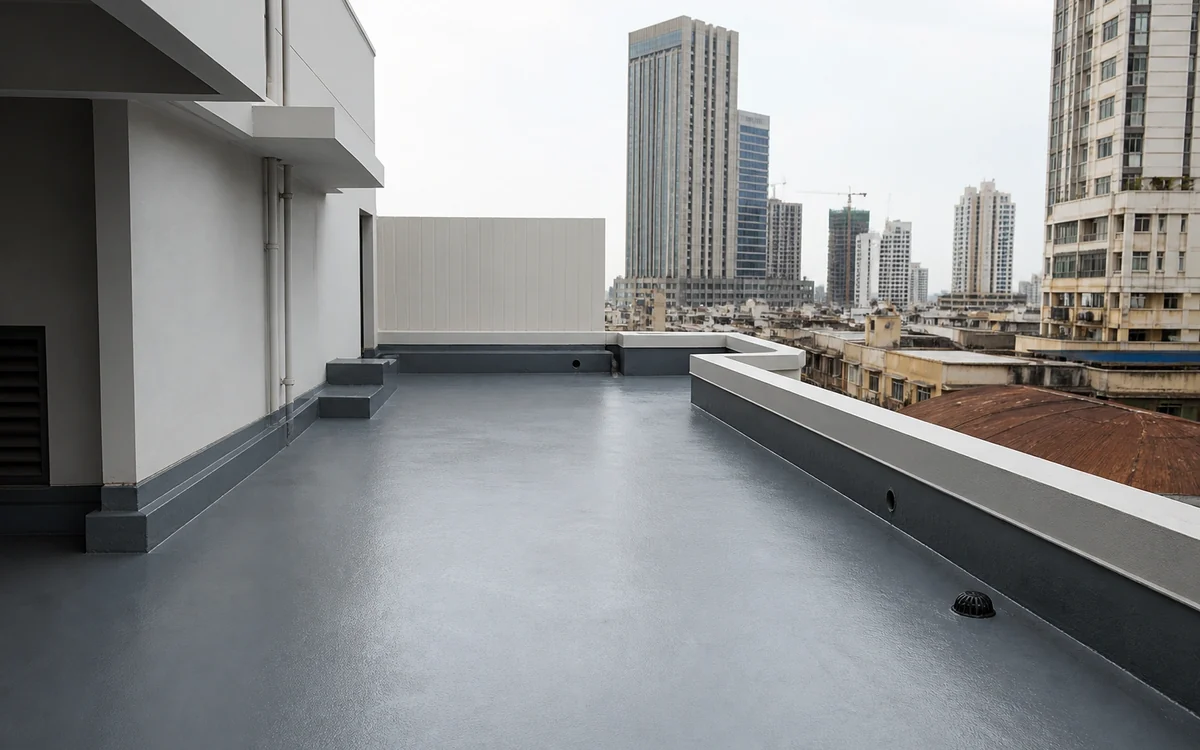
Polyurethane systems are the other main resin family. They are more flexible than epoxy, and aliphatic PU topcoats hold their colour in sunlight where epoxy yellows. PU systems are often specified for food-safe and healthcare environments, and floors that see hot water, steam cleaning and thermal shock usually call for a PU-cement screed rather than a thin coating. The choice is made against the duty, not the price alone.
General Contracting · Type 04
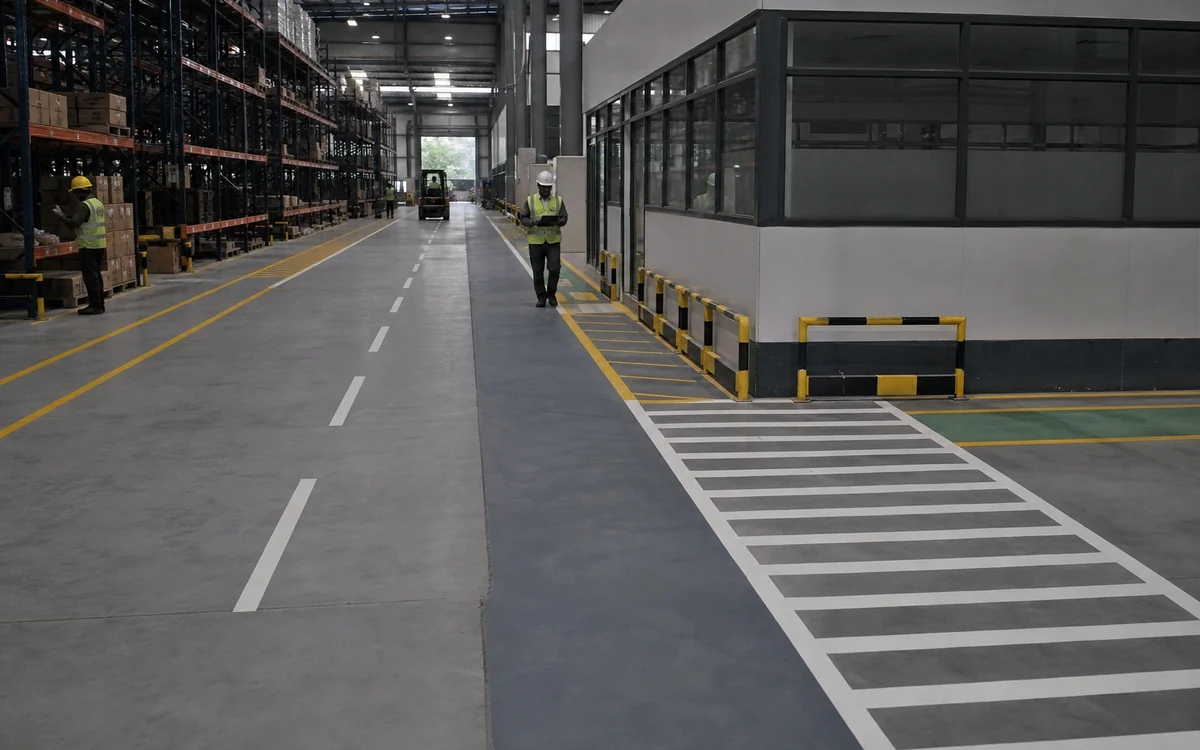
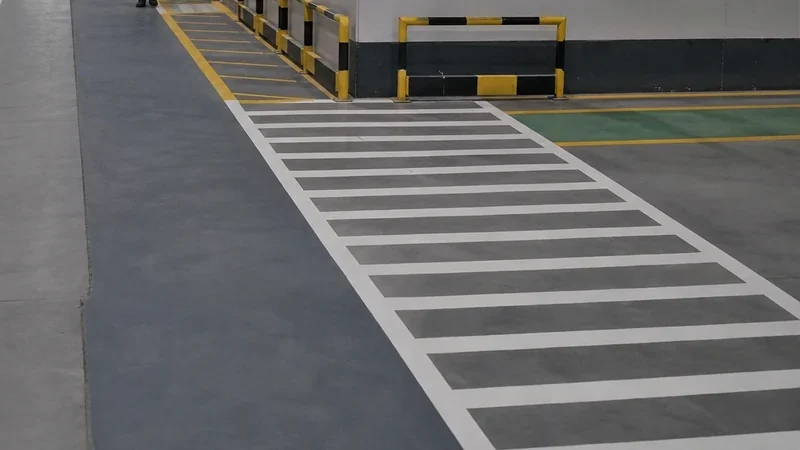
A warehouse or car park floor is also a traffic plan. IBS lays aisle lines, walkways and hatched zones in resin as part of the floor package, so the markings bond to the same prepared surface and are not left to a second contractor after handover.
Specification
The slab, the system and the application conditions decide whether an epoxy floor lasts. IBS treats all three as part of the job, and records what was applied where.
Ready when you are
Share the site, the scope and the date you need it working. We quote against a BOQ with every component itemised, and the first site visit carries no charge.
How We Deliver
An epoxy floor inside a fit-out follows the fit-out’s own programme, and a standalone floor is programmed at quotation against its area, system and cure times. The sequence below is the same either way.
IBS inspects the concrete, records cracks, joints and damage, and tests moisture. On an operating site, the survey also records how the floor is used, so the system matches the traffic.
System options are priced against your budget and the duty. The chosen system, colour, markings and area are fixed in the BOQ, along with the zones and sequence if the site stays in use.
The slab is ground or otherwise mechanically prepared to remove laitance and contamination, then vacuumed clean.
Cracks, joints and damaged areas are made good, and the primer is applied to the prepared concrete within the manufacturer’s conditions.
Body coats, self-levelling layers or heavy-duty build-ups are applied as the system states, with recoat times observed between layers.
Aisle lines, walkways, hatched zones and bay markings are set out to the approved layout and applied once the floor below is ready.
The floor is protected while it cures to the manufacturer’s traffic time, inspected, snagged and handed over with a record of the system, colour and area.
Why Buyers Choose IBS
Epoxy flooring is often bought on rate from a specialist applicator who arrives, coats and leaves. IBS lays floors as part of its own site teams. These are the differences that make.
IBS prepares, tests and repairs the concrete before any coating goes down. On an IBS fit-out, the civil team that repairs the slab and the crew that coats it work under the same project lead.
IBS offers coating, self-levelling, heavy-duty, anti-static and PU options priced against your budget and the duty the floor faces. You or your consultant decide, and the choice is recorded in the BOQ.
Preparation, primer, coating and line marking are one scope from one team. There is no gap between the flooring contractor and the marking contractor for defects to fall into.
Warehouses, kitchens and car parks rarely stop for a floor. IBS lays them zone by zone, with cure times planned into the handover of each zone so operations can move back in on a known date.
The people grinding, coating and marking the floor work for IBS. Crews mobilise from Mumbai to sites across India, with the same preparation and testing routine on every one.
Both are resin floors bonded to prepared concrete. They differ in what they are built to carry and where they hold up well. This is a general comparison; the right choice for your floor comes from its duty and cleaning regime.
| Epoxy (coating or self-levelling) | PU coating | |
|---|---|---|
| Typical areas | Stores, production floors, forklift routes, plant rooms, showrooms | Food and healthcare areas, daylight-exposed floors; PU-cement screeds where floors take hot wash-down |
| Main strength | Hard and resistant to wear, with heavy-duty grades for impact | More flexible; aliphatic PU topcoats hold their colour in sunlight |
| Watch-out | Yellows in direct sunlight; thin coatings wear through under heavy wheeled traffic | Chosen for its duty, so the system must match the environment and cleaning |
| Slip resistance | Anti-skid aggregate added where the floor gets wet | Textured finishes available for wet areas |
| Build-up | Thin rolled coats, or poured and built up for heavy duty | Rolled or spread as a coating system |
Sectors We Serve
The same resin behaves very differently under a forklift, a hot wash-down or a hospital trolley. These are the sectors where IBS lays resin floors and what each asks of them.
Pallet trucks, forklifts and long aisles need a hard-wearing floor and clear markings. Floors in running warehouses are laid zone by zone, around the racking and the working day.
Production floors face impact, abrasion, oils and sometimes chemicals. Heavy-duty and anti-static grades are matched to the process the floor supports.
Car parks need anti-skid finishes on ramps and wet areas, lane lines, bay numbering and keep-clear zones, laid in phases so parking stays open.

Floors are wet, hot and washed daily. Floors that take hot water and steam cleaning usually call for a PU-cement screed, with resin coving at wall bases, chosen against the cleaning regime.
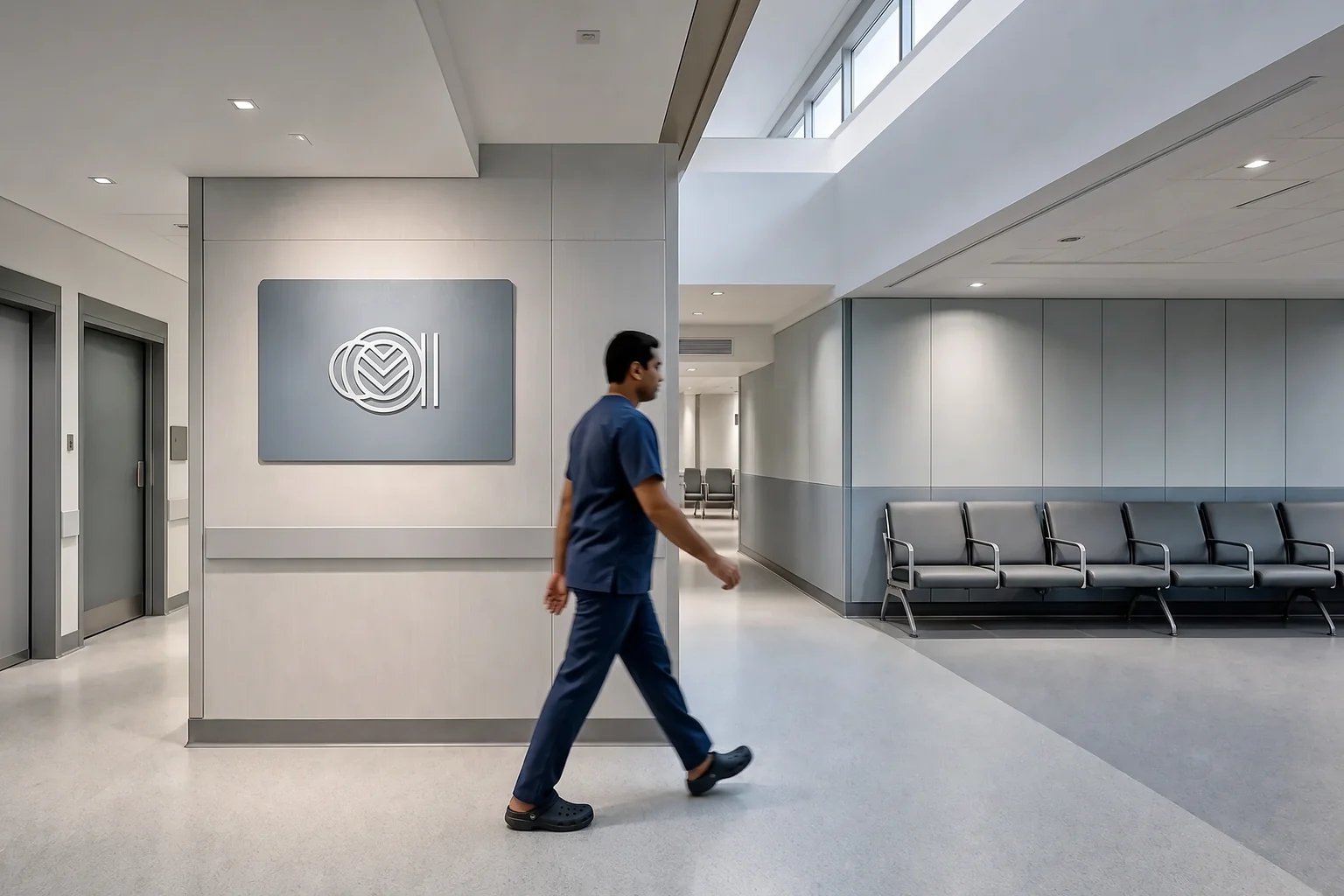
Service areas, laboratories and plant rooms in hospitals often take resin floors, while clinical areas such as wards commonly use sheet vinyl with coved skirting. IBS offers both through its healthcare fit-out work.
See healthcare projects
Vehicle showrooms and workshops combine a presentation floor with workshop traffic. Self-levelling epoxy gives a clean finish in the showroom and heavier grades in the service bays.
See retail projectsCommercials
Epoxy flooring is quoted from a slab survey, a chosen system and a measured area. IBS does not publish a per-square-foot rate, because the rate alone hides the part that decides the outcome: how much preparation and repair the slab needs.
Slab survey and moisture testing, mechanical preparation, crack and joint repair, primer and the chosen coating or screed system, line marking, protection during cure, snagging, and a handover record of the system and colour applied in each area.
The condition of the slab and how much repair it needs, the system and build-up chosen, the area and the number of zones, line-marking quantities, coving, and whether the site stays in use while the floor is laid.
Structural repair of the slab beyond surface making-good, treatment of rising damp at source, and any licences or permissions the site needs, which the owner or occupier obtains.
| Discipline | Term |
|---|---|
| Epoxy and PU floor systems | typically twelve months from application, subject to the specified traffic and cleaning regime |
| Floor materials | manufacturer warranty passed through on the specified system |
A slab survey is carried out before quotation wherever the site can be accessed. A price worked out from an area figure alone cannot allow for the slab’s condition, and that is where many epoxy floor variations and failures begin.
Questions
These are the questions facility heads, plant managers and procurement teams most often ask before appointing an epoxy flooring contractor.
The Company
Impulse Branding Solutions is a Mumbai-headquartered, vertically integrated commercial branding and fit-out execution company with over fifteen years of operating history. We deliver across two service lines under one roof: print branding and signage, including ACP cladding, LED sign boards, glow signs, channel letters, vehicle wraps and exhibition fabrication, and commercial interior fit-outs covering civil, MEP, false ceiling, joinery and turnkey contracting.
Our in-house manufacturing facility, in-house civil and engineering team and in-house furniture factory near Vasai East mean every project, from a single signage installation to a multi-Crore fit-out, runs through one team with single-point accountability. Approved vendor with Adani Airports, HSBC, Reliance Retail, HDFC ERGO, HDFC Life, Godrej Finance, EPSON, Duravit, Tata CLiQ, Canon, Aditya Birla Fashion and Retail. BCAS-cleared for airport work. Pan-India delivery at a single execution pace.
Read more about IBSTrack Record
A senior, in-house project team
Civil, MEP, and joinery leads supporting enterprise fit-out and branding projects across India.
“Every project runs under one accountable team, from site survey to final handover.”
Company-level BCAS security clearance for airport projects; site access arranged per assignment
Approved vendor with
Adani Airports · HDFC ERGO · Reliance Retail · Godrej Finance · EPSON · Duravit · HSBC · Tata CLiQ · Canon · Aditya Birla Fashion and Retail · HDFC Life
Past clients
Accessorize · Adani Airports · Aditya Birla Fashion and Retail · Duravit · EPSON · Godrej Finance · HDFC ERGO · HSBC · Reliance Retail · Sagility · Society Tea
Related Capabilities
Epoxy flooring usually sits inside a wider building or fit-out package. These are the IBS service lines it works most closely with.
Commercial-scale painting: interior emulsion, texture finishes, exterior paint, epoxy flooring, and surface preparation for commercial spaces pan-India.
View DetailsDedicated office fit-out service for corporate clients, open-plan, hybrid, and traditional configurations. MEP-integrated, brand-ready, on-time delivery.
View DetailsHospital ward fit-outs, clinic interiors, diagnostic centre build-outs, and medical institution projects executed with hygiene and compliance standards.
View DetailsHotels, resorts, restaurants, cafes, and F&B space fit-outs built to hospitality brand standards. Civil, MEP, furniture, fixtures, lighting, and branding.
View DetailsFurther reading
References
Ready to Start?
Share the area, how the floor is used and the slab’s condition. IBS will arrange a slab survey and moisture test and send an itemised quotation, with system options priced side by side.
Request an epoxy flooring quoteTell us about your epoxy flooring requirement.