 WhatsApp
Sector 08
Restaurant & Cafe Signage,
Board Design & Fit-Outs
Sign boards, menu boards, statutory displays and outlet fit-outs for restaurants, cafes, bakeries and QSR chains, fabricated at the IBS Mumbai facility and installed by IBS crews across India. India's food services market reached ₹6,96,072 crore in 2025, and organised operators are expected to grow 12 to 14% a year to 2030 (IBEF, 2025). Every one of those new outlets needs a readable fascia, a menu board and an FSSAI display board on opening day.
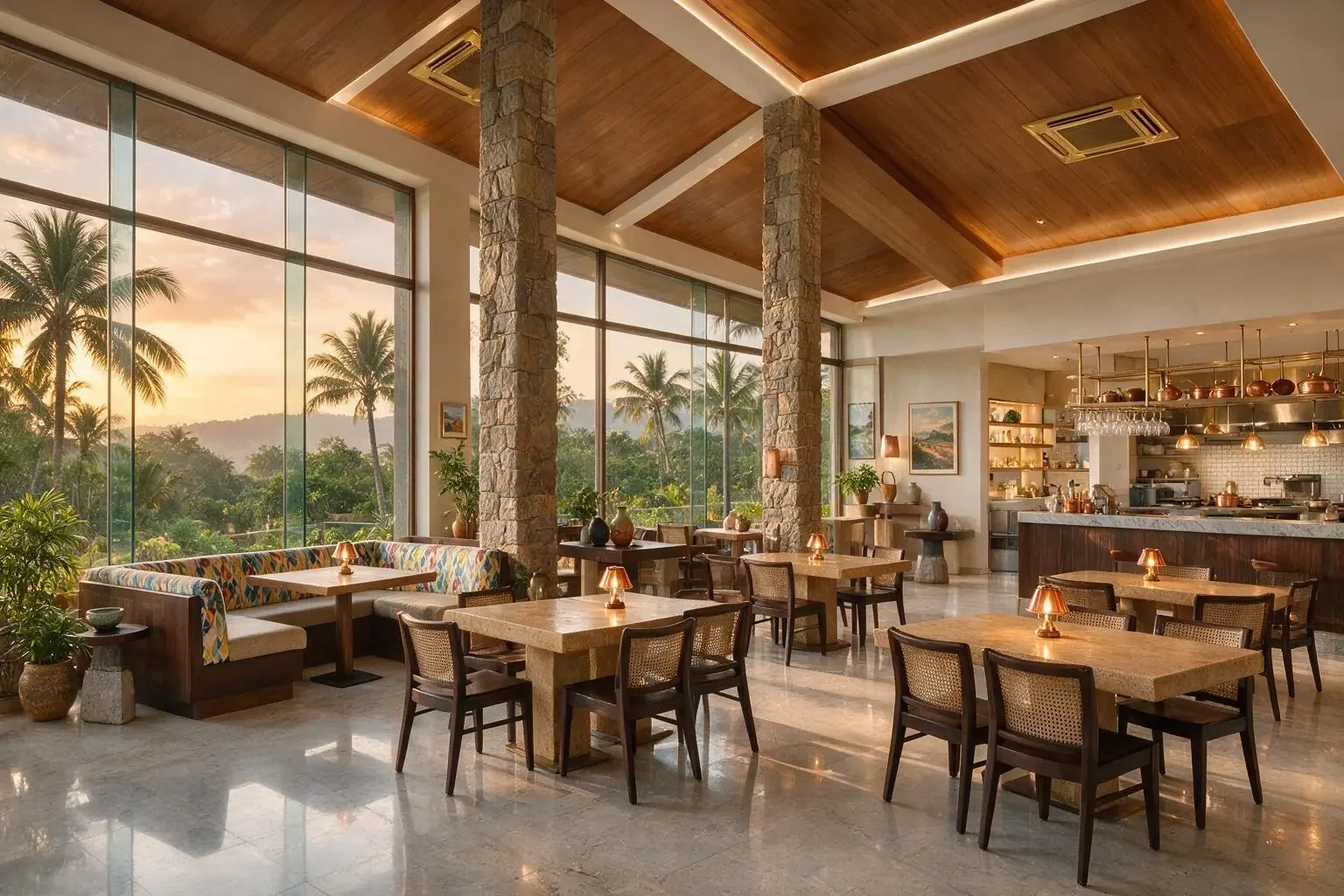
Restaurants, Cafes & QSR, Shop board design, glow and neon signage, menu boards, statutory displays and full outlet fit-outs for restaurants, cafes, bakeries, cloud kitchens and QSR chains, from a single outlet to a chain opening new outlets every month. Impulse Branding Solutions executes all work in-house, from fabrication at our Mumbai facility to site installation, with a single in-house civil and engineering team. Named clients include: Society Tea, Belgian Waffle.
Services We Deliver
Restaurants, Cafes & QSR Branding & Fit-Out Services
Sector Challenges We Solve
What Makes Restaurants, Cafes & QSR Projects Different
The Board Has to Work at 40 Metres and at Night
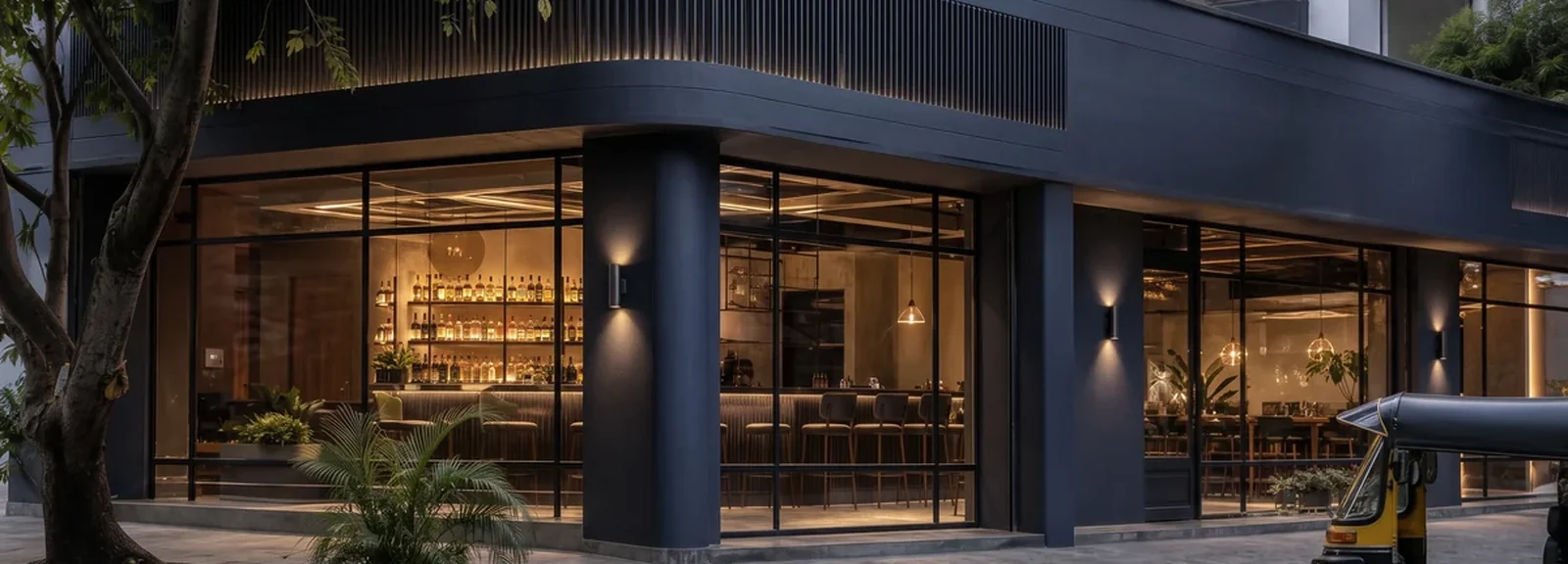
Most walk-in trade for a cafe or QSR outlet is decided from the street, often after dark. A fascia that reads well in a render can disappear against a busy frontage. IBS sizes letter height for the real viewing distance on that road, picks lit or non-lit construction per location, and checks the LED layout for even glow before the board leaves the factory.
Heat, Grease and Steam Inside the Outlet
Kitchen-side walls, menu boards above a fryer line and signage near tandoors face heat, oil vapour and daily wet cleaning. Paper-backed prints lift and yellow within months. IBS specifies wipe-clean laminated vinyl, acrylic and aluminium near the kitchen, and keeps LED drivers out of the hot zone so they are not cooked in their first summer.
Outlet Number 40 Must Match Outlet Number 1
A chain opening outlets in different cities gets drift: the orange shifts, the logo sits 50 mm lower, a local fabricator swaps the LED module. IBS works from one approved outlet kit, colour-matches every print run against the brand swatch and builds every board to the same drawing, so a new opening is an installation job, not a redesign.
Why Impulse Branding Solutions
Our Advantage in Restaurants, Cafes & QSR
Fabricated in Mumbai, Installed Anywhere
Glow boards, channel letters, neon, ACP fascias and menu lightboxes are made at the IBS Mumbai facility and QC-checked before dispatch, so defects surface in the factory, not on opening day.
Statutory Displays in the Same Package
The FSSAI Food Safety Display Board, the Marathi-first name board for Maharashtra outlets, fire exit signage and licence frames are planned with the brand signage, not added as an afterthought by the outlet manager.
Signage and Fit-Out From One Team
Civil, MEP, false ceiling, joinery, counters and signage run under one IBS project manager, so the fascia bracket is designed into the shopfront instead of drilled into it after handover.
Frequently Asked Questions
Common Questions About Restaurants, Cafes & QSR Projects
What signage does a restaurant or cafe in India need?
Four groups. Exterior: the fascia or name board, plus a projecting or blade sign if the frontage allows. Interior: menu boards, wall graphics and wayfinding to washrooms. Statutory: the FSSAI Food Safety Display Board, a true copy of the FSSAI licence, and green illuminated exit signs where the National Building Code applies. Glass: window graphics or one-way vision film. In Maharashtra the name board must also carry Marathi in Devanagari first.
Is the FSSAI Food Safety Display Board mandatory for restaurants?
Yes. FSSAI order dated 19 September 2018 requires every restaurant to display a Food Safety Display Board carrying its FSSAI licence number, and the 2018 conditions of licence say it must be shown at all times at a prominent place in the premises. The order specifies A3 size and suggests the entrance, reception or billing area. It warned that non-compliance after 15 October 2018 would attract action under the Food Safety and Standards Act, 2006.
What does the FSSAI Food Safety Display Board show?
The restaurant template attached to the FSSAI order carries the outlet's FSSAI licence number, twelve golden rules of hygiene (for example keeping hot food above 60°C and cold food below 5°C, and storing veg and non-veg separately), FSSAI's consumer toll-free and SMS or WhatsApp feedback numbers, a block for the outlet's own feedback contact, and a prompt to download the FSSAI app. It is a separate requirement from displaying the licence certificate itself.
Do restaurant chains have to show calories on their menu boards?
Yes, if the business holds a central FSSAI licence or has outlets at 10 or more locations. Regulation 9(1) of the FSS (Labelling and Display) Regulations, 2020 requires calories in kcal per serving, with the serving size, against each item on menu cards and boards, plus a line that an average active adult needs 2,000 kcal a day. FSSAI extended compliance to 1 July 2022. This changes how menu boards are laid out, so plan it into the artwork.
Do all restaurants need veg and non-veg symbols and allergen information on the menu?
Yes. Regulation 9(2) of the FSS (Labelling and Display) Regulations, 2020 applies to all food service establishments, not only chains. Menu cards and boards must show the veg or non-veg logo against each item and allergen information, which the regulation says may be shown with easy-to-understand symbols. Event caterers and premises operating fewer than 60 days a year are exempt. Full nutrition information must be available on request.
Does a restaurant name board in Maharashtra have to be in Marathi?
Yes. Section 36A of the Maharashtra Shops and Establishments Act, inserted by the 2022 amendment, requires the name board in Marathi in Devanagari script. Other languages may be added, but the Marathi lettering must come first and must not be smaller than any other script. It applies to establishments with fewer than ten workers too. Establishments serving liquor may not name the board after legends or forts. The Supreme Court directed compliance in September 2023.
Do I need BMC permission for an illuminated restaurant sign board in Mumbai?
Yes for lit boards. BMC's Policy Guidelines for Display of Outdoor Advertisements 2025 require written permission for glow signs, illuminated name boards and backlit displays on shops, and treat display without it as an offence under the BMC Act. A non-illuminated board naming the occupier or its trade needs no permission. Boards must not project beyond the building line, and one over 300 sq ft needs a structural stability report.
How much does a restaurant sign board cost in India?
Published IndiaMART listings seen on 26 September 2026 put the middle half of prices at about ₹35 to ₹238 per sq ft for flex boards, ₹213 to ₹700 per sq ft for glow sign boxes, ₹280 to ₹999 per sq ft for acrylic boards and ₹63 to ₹150 per inch of letter height for 3D LED letters. These are market reference ranges, not IBS quotations. Most listings do not say whether installation, electricals or GST are included.
What kind of sign board is best for a restaurant or cafe?
It depends on the street and the hours. A backlit glow box is the most economical lit option and suits a fascia seen head-on. 3D LED channel letters read better from an angle and look more premium. LED neon suits a cafe that trades on atmosphere and evening footfall. A non-lit ACP board with applied lettering suits daytime trade and, in Mumbai, avoids the BMC permission that illuminated boards need.
What is the standard size of a shop sign board for a restaurant?
There is no single national standard size. The board is sized to the fascia you have and to the distance people read it from. The rules that do limit size are local: in Mumbai, BMC's 2025 guidelines say a board on business premises must not project beyond the building line, boards above 300 sq ft need a structural stability report, and approval moves to a more senior officer above 200 and 400 sq ft.
What materials last near a restaurant kitchen?
Heat, oil vapour and daily wet cleaning destroy paper-backed prints. Near the kitchen and the pass, specify laminated vinyl on aluminium composite panel, acrylic, or powder-coated aluminium, all of which wipe clean. Keep LED drivers out of hot zones and ventilate lightbox enclosures, because heat shortens driver life. For wall graphics in dining areas, a laminated, washable wallpaper print outlasts an unlaminated vinyl.
How much does a restaurant interior fit-out cost per sq ft in India?
Petpooja's 2026 guide for Indian restaurant owners puts a basic QSR or takeaway at ₹800 to ₹1,500 per sq ft, a themed casual dine or cafe at ₹1,500 to ₹3,000, and fine dining at ₹3,000 to ₹6,000 and above, so ₹8 lakh to ₹60 lakh for a 1,000 sq ft outlet. It notes metro locations cost 20 to 30% more than tier-2 cities. Treat these as a reference; a real number needs a drawing and a BOQ.
Can IBS roll out signage for a restaurant chain opening outlets in several cities?
Yes. The outlet kit (fascia, menu boards, interior graphics and statutory displays) is drawn once and approved, then every opening is produced at the Mumbai facility to that drawing, colour-matched against one approved swatch, and dispatched with installation drawings. IBS crews install across India, and the closeout pack carries as-built photographs of each outlet so head office can check outlet 40 against outlet 1 without a site visit.
How long does a restaurant sign board take to make and install?
It depends on the type and on approvals. IBS's LED neon work typically runs 2 to 4 weeks from brief to commissioning, and glass-tube neon 4 to 6 weeks. In Mumbai, an illuminated board also needs BMC permission before display, so the application should go in as soon as the drawing is fixed. For a new outlet, plan signage alongside the fit-out programme rather than after it.
Should a cafe use real glass neon or LED neon?
Most cafes now choose LED neon flex: it is cheaper to run, cooler to the touch, less fragile and quicker to make, which suits a sign mounted near seating. Glass-tube neon has a softer, deeper glow that some brands want, but it needs specialist bending, a transformer and more careful mounting. Both need their power supply accessible for service.
Is a digital menu board worth it over a printed backlit menu?
For a single outlet with a stable menu, a backlit printed menu is simpler: IndiaMART listings put backlit light boxes at about ₹400 to ₹600 per sq ft. A digital menu board, typically ₹27,450 to ₹49,500 per screen on IndiaMART digital signage listings, pays back when prices, combos or dayparts change often across many outlets, and makes the calorie display required of chains easier to keep current.
Does IBS do the full restaurant fit-out or only the signage?
Both. IBS carries civil work, MEP, false ceiling, flooring, joinery, counters and signage under one project manager, with furniture from its Vasai East factory. Doing the shopfront and the signage together means the fascia structure, its power point and the lightbox access are designed into the frontage rather than retrofitted, which is where most restaurant sign problems start.
What fire exit signage does a restaurant need?
The National Building Code 2016, Part 4, treats a restaurant as an assembly occupancy where 50 or more people gather, using 1.8 m² per person for dining areas. It requires green exit signs, illuminated and wired to an independent circuit on an alternative supply, placed so no point on an exit route is more than 30 m from a visible exit sign, with signs at every change of direction.
Which restaurant and cafe brands has IBS worked with?
IBS's food and beverage clients include Society Tea and Belgian Waffle. Across its wider client base IBS has worked with Reliance Retail, Aditya Birla Retail, HSBC, HDFC ERGO and Adani Airports, and is an approved vendor with several of them. Reference projects and client contacts are shared on request once a brief is in hand.
What warranty does IBS give on restaurant signage?
Signage workmanship is warranted for 12 to 24 months depending on the product, with manufacturer warranty passed through on named LED modules and power supplies. The warranty certificate, electrical test records and the LED and driver documents are handed over with the installation, and a named IBS contact holds the drawings and spares for the warranty period.
What signage does a restaurant or cafe need, and what does it cost?
A readable fascia or name board, menu boards, and three statutory displays: the FSSAI Food Safety Display Board, a true copy of the FSSAI licence, and illuminated exit signs where the building code applies. Published Indian market listings put glow sign boxes at about ₹213 to ₹700 per sq ft and 3D LED letters at ₹63 to ₹150 per inch of letter height. IBS fabricates and installs all of it.
What is a Food Safety Display Board?
A Food Safety Display Board (FSDB) is an A3 notice that FSSAI requires every restaurant to show at a prominent place. It carries the outlet’s FSSAI licence number, twelve basic hygiene rules and FSSAI’s consumer feedback channels. It is separate from the licence certificate, which must also be displayed.
What is a glow sign board?
A glow sign board is a box sign with a translucent face, usually printed flex or acrylic, lit from inside by LED modules. It is the most common lit fascia on Indian restaurants because it is economical and reads well head-on, though it looks flatter than 3D letters from an angle.
What is an outlet kit?
An outlet kit is the approved set of drawings, artwork and material specifications for one restaurant format: fascia, menu boards, interior graphics and statutory displays. A chain approves it once, and every new opening is produced to it, which is what keeps outlet 40 identical to outlet 1.
Scope
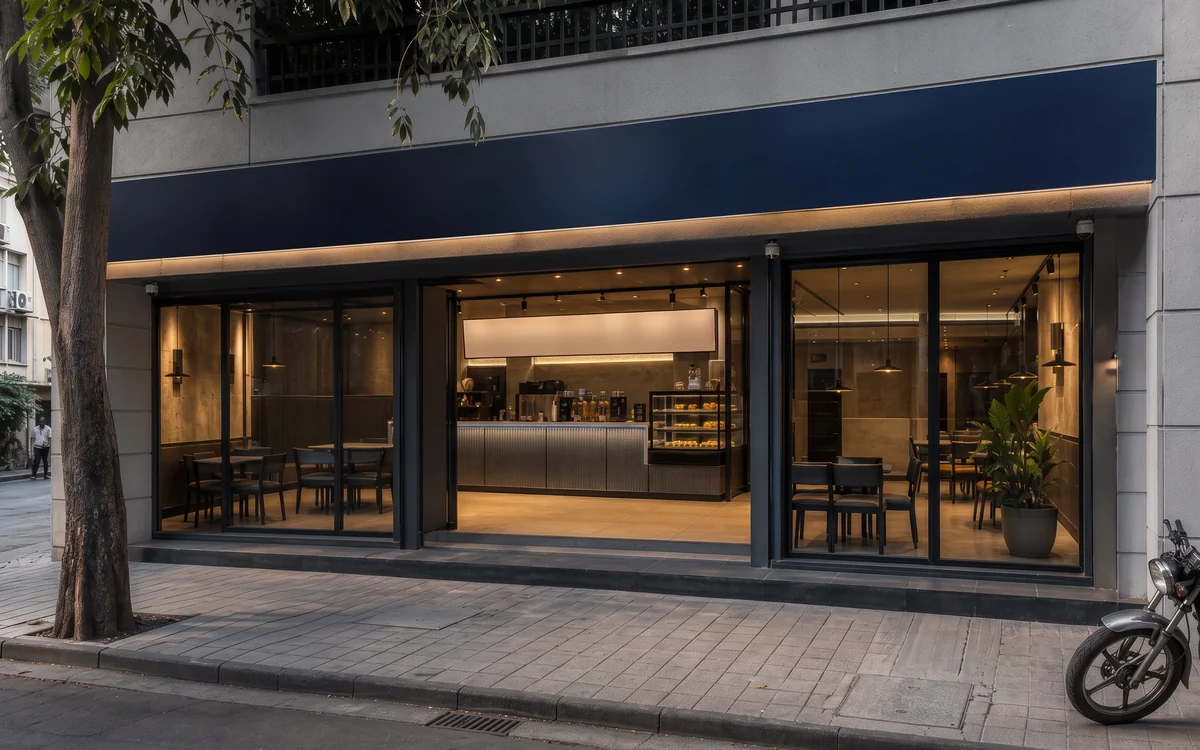
What goes into a restaurant or cafe signage package
Grouped the way the work is actually drawn and priced. Indian owners usually search for this as board design or interior design; it is the same scope.
Exterior
- Fascia or name board: glow box, 3D LED channel letters, or non-lit ACP with applied lettering
- Projecting blade sign where the frontage and local rules allow it
- ACP cladding around the shopfront so the board sits on a finished surface
- Timer or photocell switching so the sign is lit when the street is busy
- Marathi-first lettering on every Maharashtra name board
Menu and counter
- Backlit menu lightboxes over the counter, with swappable printed faces
- Digital menu boards for chains that change prices, combos or dayparts
- Calorie, veg/non-veg and allergen marks built into the menu artwork
- Counter fronts, order and pickup markers, queue guidance
Dining room and glass
- Wall graphics printed on laminated, washable wallpaper media
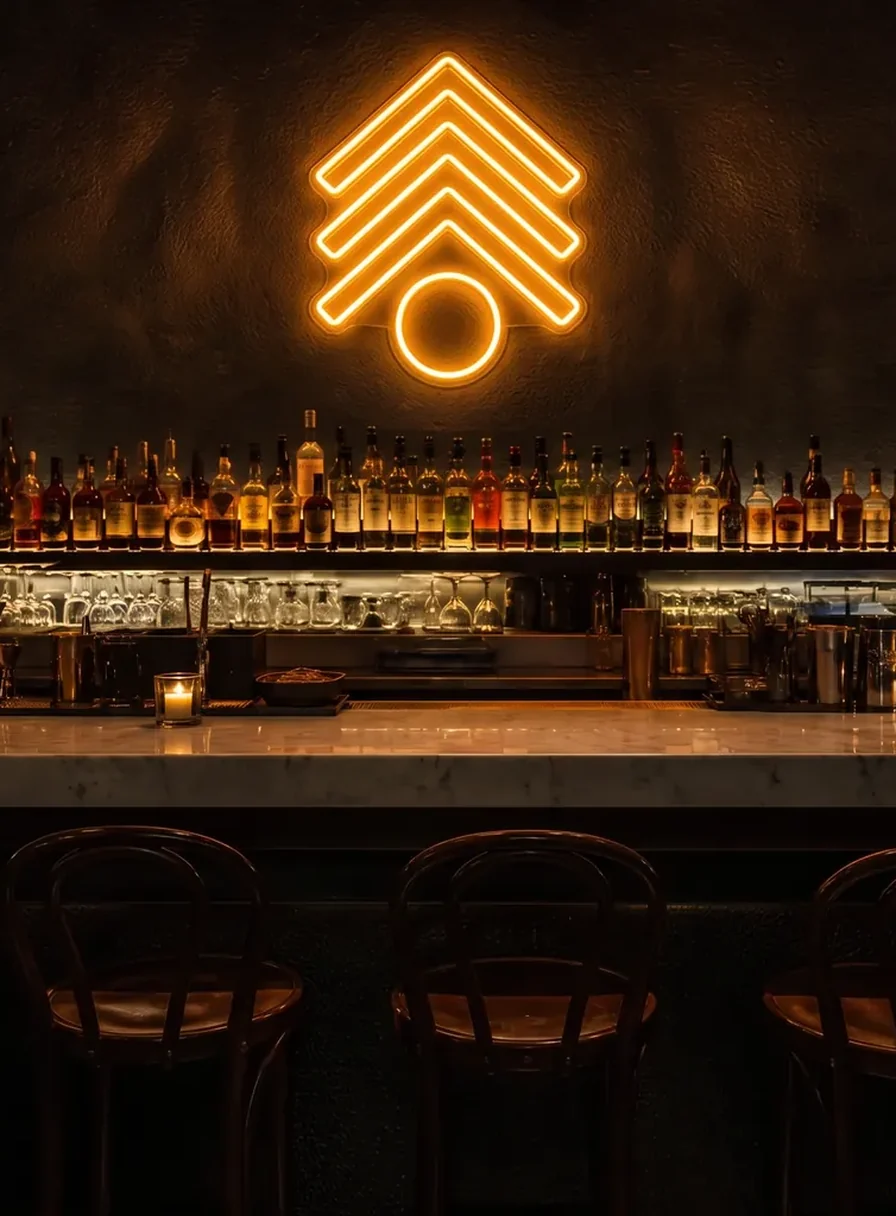
- LED neon feature pieces for cafes that trade on evening atmosphere
- One-way vision film or frosted manifestation on street glazing
- Washroom and exit wayfinding in the brand’s own style
Kitchen-side zones
- Laminated vinyl on aluminium composite panel, not paper-backed prints
- Acrylic and powder-coated aluminium that survive daily wet cleaning
- LED drivers kept out of hot zones and enclosures ventilated
- Hygiene and allergen notices for staff areas
Compliance
Which displays are mandatory for a restaurant in India?
The statutory signage most restaurants get wrong or add at the last minute, with the rule behind each one. Sources are linked at the foot of the page.
FSSAI, every restaurant
- Food Safety Display Board, A3, at a prominent place such as the entrance, reception or billing area (FSSAI order, 19 September 2018)
- A true copy of the FSSAI licence, displayed at a prominent place at all times (FSS Licensing and Registration Regulations, 2011)
- A notice listing items cooked in ghee, edible oil, vanaspati and other fats (conditions of licence)
- Veg or non-veg logo and allergen information against items on menu cards and boards (FSS Labelling and Display Regulations, 2020)
FSSAI, chains
- Outlets at 10 or more locations, or a central licence: calories in kcal per serving on menu cards and boards
- The serving size shown alongside the calorie figure
- The line that an average active adult needs 2,000 kcal a day
- Full nutrition information available on request, in a booklet, handout or on the website
Maharashtra and Mumbai
- Name board in Marathi, Devanagari script, written first, no smaller than any other script (Section 36A, Shops and Establishments Act, 2022 amendment)
- Applies to establishments with fewer than ten workers as well
- Premises serving liquor may not name the board after legends or forts
- BMC written permission for glow signs, illuminated name boards and backlit displays; a non-lit board naming the occupier needs none
- Boards must not project beyond the building line; over 300 sq ft needs a structural stability report
- Heritage buildings need Heritage Committee NOC even where no licence is otherwise required
Fire and life safety (NBC 2016, Part 4)
- A restaurant becomes an assembly occupancy at 50 or more people, at 1.8 m² per person for dining areas
- Green exit signs, illuminated, on an independent circuit with an alternative supply
- No point on an exit route more than 30 m from a visible exit sign
- A directional sign at every change of direction
Chains
How a QSR or cafe chain signage rollout works
For a chain, the hard part is not the first outlet. It is keeping the fortieth identical to it, on time, in a city your team has never visited.
From one approved outlet to many
- Site survey of each new outlet: fascia width and height, power point, landlord rules
- Artwork adapted to each fascia from the approved kit, with a Marathi variant for Maharashtra
- A prototype outlet built and signed off before batch production
- Batch production at the Mumbai facility, colour-matched to one physical swatch
- Dispatch with installation drawings; IBS crews install and commission
- Local permission paperwork, including BMC applications for lit boards in Mumbai
What head office receives
- As-built photographs of every outlet, day and night
- One programme across all openings, not one per city vendor
- Named LED and driver components, so replacements match
- One warranty claim point for the whole network
What IBS brings regardless of sector
- Signage fabricated at the IBS Mumbai facility: laser cutting, powder coating, assembly, QC
- Furniture built at the Vasai East factory to as-built dimensions
- In-house civil engineers, MEP coordinators, false ceiling and joinery teams
- Built to NBC 2016, IS 3043 (earthing) and IS 732 (electrical installation)
- Factory QC on every unit before dispatch, so defects surface in Mumbai not on site
- Pan-India delivery plus UAE, Saudi Arabia, Oman, Qatar and Kuwait
What you receive at handover
- Joint snag walk, snags listed, dated, closed and photographically evidenced
- As-built drawings plus commissioning and test records for HVAC, electrical and fire
- Warranty certificates with manufacturer pass-throughs collated in one file
- Signage workmanship warranted 12 to 24 months; fit-outs carry a stated defect liability period
- A named IBS contact for that period, holding the original drawings and spares
Commercials
How the work is priced, specified and verified
The parts of a quotation that decide whether the number you compare is the number you pay, and the named components behind the specification.
How a price is built
- A line-item BOQ against a stated scope, not a rate per square foot
- Component brands named on the BOQ rather than written as a generic line
- Provisional sums identified as provisional, not folded into a rate
- Written assumptions, so you can see which one moved if the number changes
- Variations agreed in writing against the original BOQ before work proceeds
- RA bills raised against measured work completed, not elapsed calendar time
Named components we specify
- LED and drivers: Nichia-class modules with Mean Well or Schneider drivers, IP65 outdoors
- Films and wraps: 3M and Avery Dennison cast media
- Electrical: Havells, Legrand and Schneider switchgear, MCB and RCCB protection
- HVAC: Daikin, Blue Star and Voltas VRF and ducted systems
- Plumbing: Astral and Supreme CPVC and UPVC, Jaquar fixtures
- Boards and laminates: Gyproc and Saint-Gobain partitions, Merino and Greenlam surfaces
What to check in any quotation, ours included
- Is the driver brand named, or does the line just say "LED driver"? That is the component that fails first and the one most often substituted downward.
- Is the defect liability period stated in months, and does it start at handover or at practical completion?
- Does the price assume access you actually have, and what happens to it if the access window changes?
- Who is the named project lead, and how many other jobs are they running at the same time?
- Are spares held against your specification, or bought nearest-match when something fails?
- On a multi-site programme, how will you be shown that site 140 matches site 1 without visiting both?
How quality is verified
- Colour proofed against one approved physical swatch under controlled lighting
- Factory QC on every unit before dispatch from the Mumbai facility
- Hydrotesting on plumbing and pressure tests on sprinkler lines before concealment
- Earthing verified to IS 3043; electrical installation to IS 732
- Snag list walked jointly, closed and re-inspected with photographic evidence
- As-built photographs of every installed location on a multi-site programme
Opening an outlet, or fifty?
Send the outlet address or site list, your brand manual and the opening date. We will come back with the signage and statutory display schedule, a programme and a line-item BOQ.
Start a restaurant enquiryRestaurant sign board prices in India: market reference ranges
These are published IndiaMART seller listings, parsed on 26 September 2026: the middle half of listed prices and the median, so a few extreme listings do not skew them. They are market reference points, not IBS quotations. Most listings do not state whether installation, electricals or GST are included, and a real price depends on size, access and specification.
| Middle half of listings | Median | Typical restaurant use | |
|---|---|---|---|
| Flex board | ₹35 to ₹238 per sq ft | ₹78 per sq ft | Temporary or promotional boards; non-lit flex at the lower end |
| Glow sign box | ₹213 to ₹700 per sq ft | ₹500 per sq ft | The standard lit fascia for single outlets |
| Acrylic sign board | ₹280 to ₹999 per sq ft | ₹500 per sq ft | Interior logo walls and premium fascias |
| 3D LED letters | ₹63 to ₹150 per inch of height | ₹80 per inch | Fascias seen at an angle; chain identities |
| LED neon | ₹350 to ₹900 per sq ft | ₹450 per sq ft | Cafe feature walls and evening frontage |
| Backlit light box | About ₹400 to ₹600 per sq ft | ₹450 per sq ft | Menu lightboxes over the counter |
| Digital signage screen | ₹27,450 to ₹49,500 per screen | ₹40,000 per screen | Digital menu boards for multi-outlet chains |
| ACP cladding | ₹185 to ₹250 per sq ft | ₹220 per sq ft | Shopfront surround behind the sign |
| Custom wallpaper print | ₹42 to ₹120 per sq ft | ₹68 per sq ft | Dining room wall graphics |
| One-way vision film | ₹14 to ₹60 per sq ft | ₹35 per sq ft | Street glazing graphics |
| Interior fit-out | ₹800 to ₹6,000+ per sq ft | n/a | Basic QSR at the low end, fine dining at the top (Petpooja, 2026) |
Market Context
What the published data says
- India’s food services market was ₹6,96,072 crore (US$ 78 billion) in 2025, projected at US$ 120 to 125 billion by 2030, with the organised segment growing 12 to 14% a year and QSRs 15 to 17%. IBEF, citing the Kearney and Swiggy How India Eats 2025 report, 28 November 2025
- The India quick service restaurants market reached USD 9.3 billion in 2025, expected to reach USD 17.7 billion by 2034 at a 7.00% CAGR. IMARC Group, India Quick Service Restaurants Market, updated 4 September 2026
- Every restaurant must display an A3 Food Safety Display Board carrying its FSSAI licence number, at entrances, reception or billing areas. FSSAI Order No. 1(80)2016/Enf-II Info/FSSAI, 19 September 2018
- Food service establishments with a central licence or outlets at 10 or more locations must show calories per serving on menus; all must show veg/non-veg logos and allergen information. FSSAI, Compendium of FSS (Labelling and Display) Regulations, 2020, Version VIII, 9 September 2025
- Glow signs, illuminated name boards and backlit displays on shops need written BMC permission; non-lit boards naming the occupier do not. BMC, Policy Guidelines for Display of Outdoor Advertisements 2025, 27 November 2025
- Glow sign board listings: middle half ₹213 to ₹700 per sq ft, median ₹500, across 20 listings on 26 September 2026. IndiaMART, Glow Sign Board category
- Restaurant interiors cost about ₹800 to ₹1,500 per sq ft for a basic QSR, ₹1,500 to ₹3,000 for a cafe or casual dine, and ₹3,000 to ₹6,000+ for fine dining. Petpooja, Restaurant Interior Design Ideas for Indian Owners (2026), updated 28 April 2026