You walk down a busy street. You see a bright, colorful sign above a coffee shop. You drive down the highway. You see a massive billboard showing a new car.
Have you ever wondered what those signs are made of?
They aren’t paper. They aren’t cloth. In most cases, you are looking at flex printing.
For business owners, getting your name out there is huge. You need people to see you. But you also don’t want to spend a fortune on hand-painted signs that fade in a month. This is where flex printing saves the day. It is the most popular way to print large outdoor ads, banners, and shop boards.
Whether you are running a small grocery store or a big corporate office, your signage is your first handshake with a customer. At Impulse Branding Solutions, we understand this. We help businesses create signs that look professional and last a long time.
But before you order your first banner, you need to know the basics. What exactly is it? How much does it cost? Let’s break it down.
Let’s start with a simple definition.
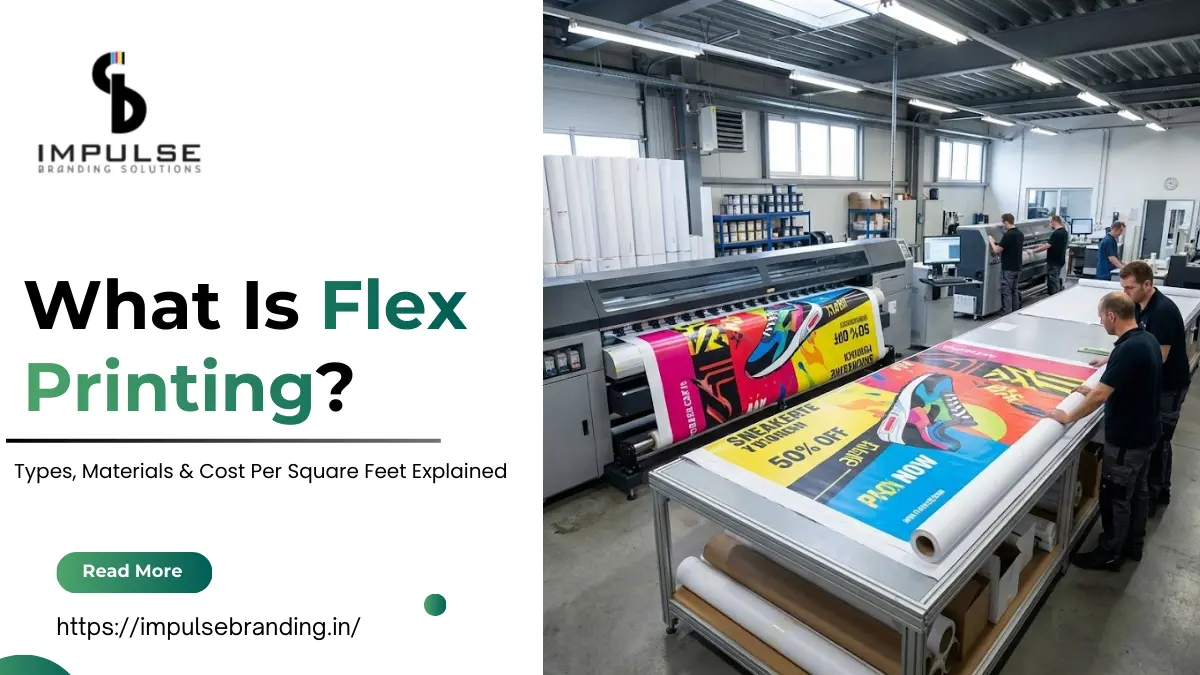
Flex printing is a technique used to print high-quality digital images on a flexible material, usually made of PVC (Polyvinyl Chloride).
Think of it like a giant sheet of very durable plastic. This material comes in rolls. It is fed into large printers that spray weather-resistant ink onto it. The result is a banner that can handle rain, wind, and strong sunlight.
People love it because it is versatile. You can wrap it around a wooden frame. You can hang it with eyelets (metal rings). You can even paste it onto a wall.
Unlike paper, it won’t tear easily. Unlike cloth, the colors stay bright for a long time. This makes it the go-to choice for almost all outdoor advertising.
You might hear the term flex digital printing and wonder if it’s different.
In the past, people used screen printing. That involved making stencils for every color. It was slow. It was expensive. And you couldn’t print photos.
Flex digital printing changed everything. It works just like your inkjet printer at home, but on a massive scale.
Here is how it works:
Because it is digital, you can print anything. Complex logos? Yes. A photo of your product? Yes. A picture of your staff? Absolutely. There are no limits on colors or gradients.
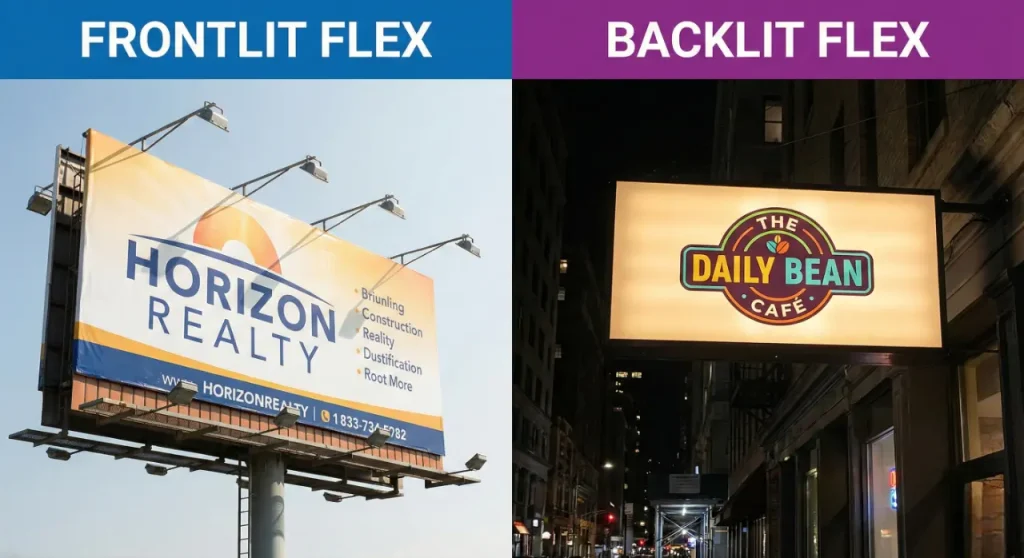
Not all flex is the same. The right type depends on where you plan to put the banner. Here are the main types you should know.
This is the most common type. It has a glossy or matte finish. It is called “frontlit” because the light source (like the sun or a spotlight) hits it from the front.
This material allows light to pass through it. It is used for glowing signboards (glow signs). You put tube lights or LEDs inside a metal box, and the flex goes over the top. At night, the sign lights up from the inside.
This flex has a black coating on the backside. This coating blocks light completely. It is very useful if you are hanging a banner where the sun shines from behind it. The black back prevents the sun from washing out your image.
This is a premium material. It has a better texture and reflects light better than standard flex. The print quality looks sharper and richer on Star Flex. It is also tougher.
Standard flex printing uses strong solvent inks. They can smell a bit harsh at first. Eco-solvent printing uses biodegradable inks. They are safer for the environment and don’t have a strong odor. The print quality is also very high definition.
Important Note on Regulations: It is important to know that the government is cracking down on thin, single-use plastic. According to the Central Pollution Control Board (CPCB) guidelines, PVC banners must now be above a certain thickness (usually 100 microns) to ensure they are recyclable and not single-use waste. At Impulse Branding, we strictly follow these environmental norms to ensure your business stays compliant and eco-friendly.
When you talk to a printer, they might ask you about the flex printing material or “media.”
The main material is PVC. But the quality of that PVC varies. Here is what you need to look for:
GSM stands for Grams per Square Meter. It tells you how thick and heavy the material is.
Sometimes people confuse these two.
Both are used in branding, but flex is usually cheaper for large sizes.
This is the big question for every business owner. How much will it cost?
Flex printing cost per square feet depends on three main things:
Printers charge by the square foot. To find the cost, you multiply the Height by the Width of your design.
Example: A 10ft wide by 4ft tall banner is 40 square feet.
Here is a general idea of cost tiers (prices are relative estimates):
| Quality Level | Material Type | Relative Cost | Durability |
| Economy | Thin Frontlit | Low | 3–6 Months |
| Standard | Normal Frontlit | Medium | 1–2 Years |
| Premium | Star / Backlit | High | 2–3 Years |
| Ultra | UV / Eco-Solvent | Highest | 3+ Years |
Note: If you order in bulk (hundreds of banners), the cost per square foot usually drops significantly.
Why is everyone using this? It’s not just because it’s cheap. It actually works.
You can make these banners huge. A 20-foot banner is hard to ignore. The colors are vibrant and catch the eye immediately.
Compared to making an acrylic 3D board or a steel letter sign, flex is very affordable. It allows small businesses to look professional without breaking the bank.
Do you need a banner for an event tomorrow? Flex printing is fast. Once the design is ready, the printing process takes minutes. At Impulse Branding, we prioritize quick turnarounds so you never miss a deadline.
Rain, dust, and sun are the enemies of outdoor signs. Flex is plastic-based, so water runs right off it. Good quality ink won’t fade quickly in the sun.
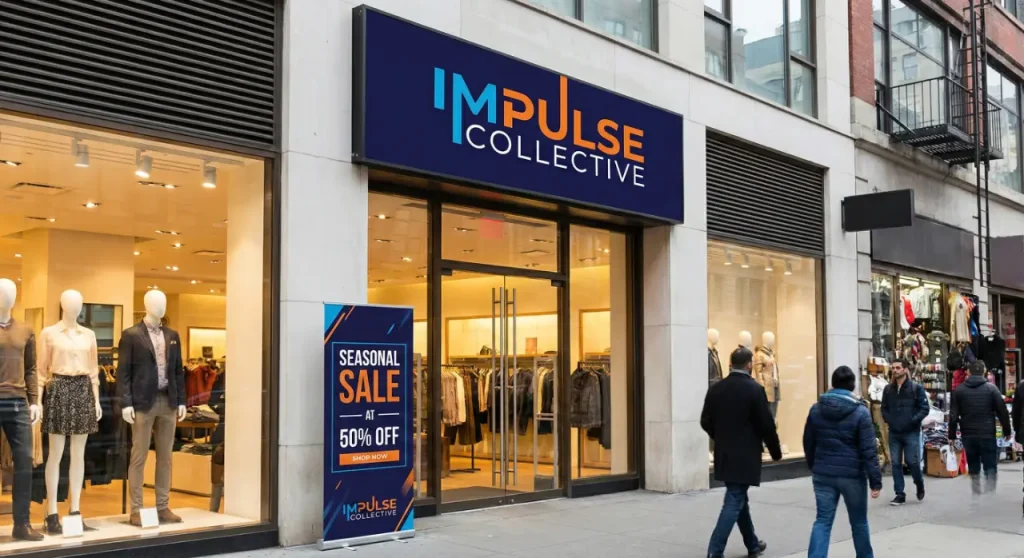
You see flex everywhere, but let’s look at specific ways you can use it for your business.
There are many printers out there. Why should you work with us?
At Impulse Branding Solutions, we treat your brand like our own. We don’t just hit “print.” We check your files to make sure the images aren’t blurry. We help you choose the right material so your sign lasts longer than a few months.
What we offer:
Don’t settle for a dull sign. Let’s make something that turns heads.
Here are some common questions we get from our clients.
What is flex printing used for?
It is used for outdoor advertising. This includes shop boards, banners, hoardings, exhibition backdrops, and event signage.
How long does flex printing last?
It depends on the quality and sunlight exposure. Standard flex lasts about 1 to 2 years. High-quality Star flex or UV prints can last 3 years or more.
Is flex printing waterproof?
Yes. Since the material is PVC (plastic) and the inks are oil-based solvents, water does not damage the print.
What is the best flex material?
For the best look and durability, Star Flex is a great choice. For glowing signs, use Backlit Flex.
What is the cost per square feet?
Costs vary by region and quality. Generally, it is the most affordable printing option available compared to vinyl or fabric.
Is flex printing good for outdoor ads?
Yes, it is the industry standard for outdoor ads because it resists weather and is cheap to replace.
Flex printing vs. vinyl printing – what is the difference?
Flex is a banner material (like a sheet). Vinyl is a sticker material (adhesive). Use flex for hanging banners. Use vinyl for sticking graphics on glass or walls.
How to choose the right flex printing service?
Look for a company that checks your design quality before printing. Ask about the ink quality they use. A good partner like Impulse Branding will guide you on the best material for your budget.
Flex printing is a powerful tool for any business. It is affordable, durable, and versatile. Whether you are launching a new product or just want to tell people where your shop is, a good flex banner does the job perfectly.
Remember, your sign is often the first thing a customer sees. Make it count.
If you are ready to upgrade your visibility, we are here to help.
Ready to get started? Contact Impulse Branding Solutions today for high-quality printing that fits your budget.