You see it every single day. You see it on the glass doors of your favorite coffee shop. You see it on the side of delivery vans zipping through traffic. You even see it on the floor of shopping malls.
But you probably just call it a “sticker” or a “sign.”
In the printing world, this is called vinyl printing. It is one of the most popular ways to make signs today. Business owners love it because it looks professional and lasts a long time. It does not tear like paper. It does not fade quickly like old painted signs.
If you run a business, you might need a new sign soon. You might want to put your logo on your office wall. Understanding vinyl printing helps you make the right choice. Companies like Impulse Branding Solutions use this technology daily to help brands look their best.
Let’s break down exactly what vinyl printing is, how it works, and why it is so popular.
Let’s keep this simple.
Vinyl printing is the process of printing images or text onto a sheet made from PVC, also known as Polyvinyl Chloride.
Vinyl printing uses PVC, which stands for Polyvinyl Chloride. PVC is a strong plastic material that does not absorb water and does not tear easily. It stays stable even in heat, rain, and dusty conditions. That is why the same material is used in pipes, electrical cables, and outdoor construction products. Because PVC handles moisture and temperature changes well, it is ideal for long-lasting signage and outdoor prints.
Unlike paper, vinyl does not break down when exposed to moisture. The ink bonds well with the surface, making the print waterproof and scratch resistant. This durability is the main reason vinyl printing is the standard choice for outdoor and long-term signage.
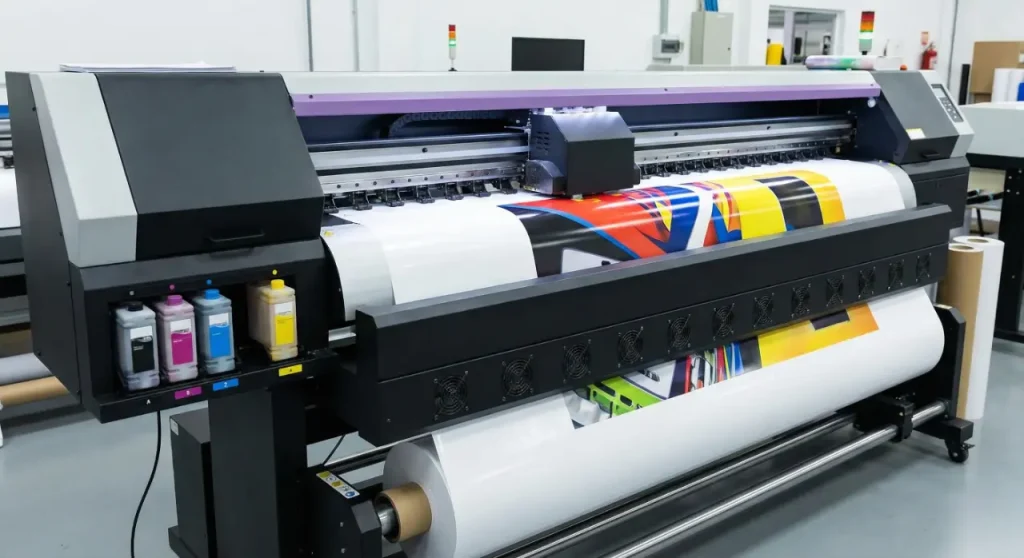
The process is fascinating but simple to understand. It is not like your office laser printer. It requires large, industrial machines.
Here is the step-by-step process.
1. Design Creation
Everything starts on a computer. A designer creates a file. This file needs to be very high quality. If the file is blurry, the big print will look bad.
2. The Printing Process
The computer sends the file to a large-format printer. These printers are huge. Some are as wide as a car. A roll of white vinyl is fed into the machine. The print head moves back and forth. It sprays ink precisely onto the vinyl roll.
3. Ink Types Used
The secret is in the ink. Regular water-based ink would wash off. Vinyl printers use Solvent, Eco-Solvent, or UV-curable inks. Solvent inks “bite” into the plastic. This locks the color into the material.
4. Drying and Finishing
The ink needs to dry or “cure.” Some machines use heat heaters to dry the ink instantly. Others use UV light. Once dry, the vinyl is rolled up.
5. Optional Lamination
This is a crucial step. A clear layer of plastic is stuck over the print. This is called lamination. It protects the print from the sun and scratches.
Not all vinyl is the same. The type you choose depends on where you want to stick it.
PVC Vinyl Printing
This is the most basic form. It is a solid sheet of white plastic. It is thick and tough. You often see this used for banners that need to look very sharp. It creates a smooth, matte, or glossy finish. It is much smoother than the textured “flex” banners you see on roadsides.
Self-Adhesive Vinyl Printing
This is basically a giant sticker. It has a paper backing. You peel off the back, and the vinyl is sticky.
Reflective Vinyl Printing
Have you seen road signs light up when your car headlights hit them? That is reflective vinyl. It has tiny glass beads or prisms inside the material. It reflects light back to the source. It is excellent for safety signs or highway advertising.
Transparent Vinyl Printing
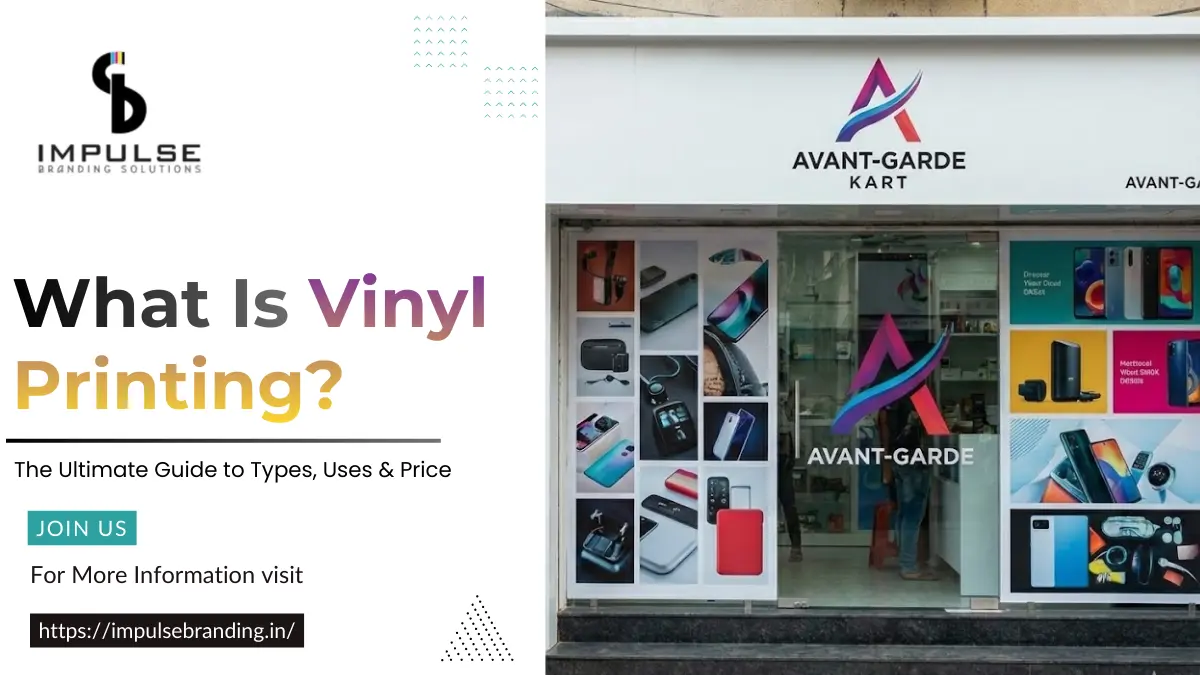
This is clear vinyl. The material is see-through. When you print on it, only the colored parts show up. The rest remains clear. This is perfect for glass partitions in offices. It lets light through while showing your logo.

Where do we actually use this stuff? Almost everywhere.
Outdoor Advertising
Big brands use vinyl printing for advertising because it handles weather well. You see it on bus shelters. You see it on metro pillars. The colors stay bright even under the hot summer sun.
Shop Sign Boards
Vinyl is often applied to shop sign boards. For long-term outdoor branding, businesses often combine vinyl prints with Glow Sign Boards to improve night visibility.
Event Branding
When you go to a conference or a wedding, look around. The welcome signs are usually vinyl pasted on foam boards. The backdrops for photos are often matte vinyl prints. They look great in pictures because they don’t reflect flash.
Vehicle Graphics
This is a huge market. You can wrap a whole car in vinyl. Delivery trucks use it to show their company name. It turns a vehicle into a moving billboard.
Wall Branding
Offices use vinyl to decorate plain walls. You can print a huge inspirational quote or a city skyline. Installers paste it directly onto the painted wall. It transforms the look of the room instantly.
Hoardings and Banners
Construction sites often have colorful barriers around them. These are hoardings covered in printed vinyl. It hides the messy construction work and advertises the upcoming building.
Why do marketers love vinyl? It comes down to one word: Quality.
Vinyl printing for advertising offers a “premium” feel. The images look like photographs. There is no graininess. When a customer walks close to a vinyl print, it looks sharp.
It is also about trust. A faded, torn paper sign looks cheap. A crisp, clean vinyl sign looks professional. It tells customers that the business cares about quality.
Durability is another factor. An ad campaign might need to run for six months. Paper won’t last a week outdoors. Vinyl lasts for years. This makes the vinyl printing cost worth it over time.
Pricing is always a major question. In India, printing costs are calculated by the square foot (sq ft).
Average Vinyl Printing Price
The price varies a lot based on quality.
Factors That Affect Vinyl Printing Cost
Why does the price change?
This is the most common confusion. People think they are the same. They are not.
| Feature | Flex Printing | Vinyl Printing |
| Material | A textured, rubbery cloth-like plastic. | A smooth, sticker-like plastic sheet. |
| Application | Hung using ropes or stretched on frames. | Pasted directly onto a surface (wall, glass, board). |
| Texture | Has a grid pattern (grainy). | Completely smooth surface. |
| Print Quality | Good for viewing from far away. | Excellent for close-up viewing. |
| Cost | Cheaper. | More expensive. |
| Durability | Good, but colors fade faster. | Very high durability. |
Think of it this way. If you need a banner for a 2-day event, use flex. If you need a permanent sign for your shop, use vinyl.
There are many good reasons to choose vinyl.
It is not perfect. There are some downsides.
You need to tell your printer where you will use the print.
Indoor Use Cases
For offices and homes, use Eco-Solvent or Latex printing. Why? Because standard solvent prints smell bad. They release fumes. You do not want that inside your air-conditioned office. Indoor vinyl usually has a matte lamination. This stops overhead lights from reflecting off the sign.
Outdoor Performance
For outside, you need toughness. You use Solvent or UV inks. These handle the harsh sun better. You usually use glossy lamination outdoors. Glossy surfaces stay cleaner because dust slides off them easily with rain.
Durability depends on the sun. The sun is the biggest enemy of ink.
Indoor Lifespan
If kept away from direct sunlight, vinyl can last 5 to 10 years inside. It will look as good as new.
Outdoor Lifespan
Outdoors is tougher.
Maintenance Tips
To make it last, clean it gently. Do not use harsh chemicals. Just use water and a soft cloth. If it is on a car, hand wash the car. Do not use high-pressure power washers directly on the edges of the vinyl.
Short answer: Yes.
Think about the Return on Investment (ROI).
Imagine you pay Rs. 500 for a cheap flex banner. It looks dull after three months. You have to replace it. You look unprofessional in the meantime.
Now imagine you pay Rs. 1500 for a vinyl printing job. It looks amazing. It attracts customers. It lasts for three years. You actually save money in the long run because you don’t have to replace it often.
However, if you just need a “House for Rent” sign for one week, vinyl is a waste of money. Use paper or cheap flex for that.
Not all printers are the same. Some use cheap Chinese ink that fades in a month. Some use cheap vinyl that shrinks and peels off.
Here is how to pick a good one:
Experience
Look for a shop that has been around for a while. They know how to handle files.
Material Quality
Ask them what brand of vinyl they use. Brands like 3M, Avery, or Star are good. If they don’t know the brand, be careful.
Installation Support
This is critical. Can they install it for you? Pasting a large vinyl sheet is an art. You do not want to ruin a good print with a bad installation.
Portfolio
Ask to see photos of their past work. Look for smooth edges. Look for bright colors.
Pricing Clarity
They should explain the vinyl printing price clearly. They should tell you if lamination is included or extra.
Companies like Impulse Branding Solutions are great examples of professional services. They guide you on the right material. They don’t just print; they ensure the final signage looks perfect on your wall or shop front.
Vinyl printing is the superhero of the signage world. It is tough. It is beautiful. It is versatile.
It transforms plain glass into branding. It turns cars into advertisements. It makes shop boards glow at night. While the vinyl printing cost is higher than simple banners, the quality justifies the price.
If you want your business to look professional, vinyl is usually the best choice. It withstands the rain and sun while keeping your brand colors true.
Next time you need a sign, don’t just ask for a print. Ask for vinyl. If you need help deciding what type works for you, reach out to experts like Impulse Branding Solutions. They can help you navigate the options and get the best value for your money.
FAQ 1: What is vinyl printing used for?
It is used for many things. The most common uses are shop signage, glass branding, car wraps, wall stickers, and outdoor advertising boards. It is used wherever you need a high-quality, sticky, and durable print.
FAQ 2: What is the average vinyl printing price in India?
The price usually starts from Rs. 45 per sq ft for basic solvent printing. High-quality eco-solvent with lamination can cost between Rs. 75 to Rs. 120 per sq ft. The price depends on the quality of the vinyl and the ink used.
FAQ 3: Is vinyl printing waterproof?
Yes, it is completely waterproof. The material is plastic (PVC), and the inks are oil-based or UV-cured. You can wash it with water, and it will not get damaged. This makes it perfect for outdoor use in the rain.
FAQ 4: How long does vinyl printing last outdoors?
A good quality vinyl print with lamination typically lasts 3 to 5 years outdoors. Without lamination, it might start fading after 1 to 2 years due to strong sunlight.
FAQ 5: Is vinyl better than flex printing?
For quality, yes. Vinyl is much sharper and looks more premium than flex. Flex is better for very large, temporary hoardings because it is cheaper. But for shop boards and office branding, vinyl is the better choice.